An amusement park receipt may cover a day ticket, a season pass, or add-ons like fast passes. This guide explains why season passes are priced below two visits, how park payment plans work, and what to keep.
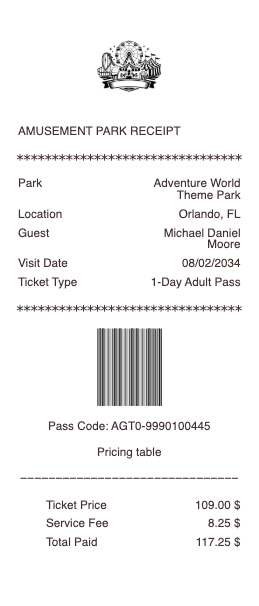
Amusement Park Receipt
Add custom logo
Edit line items
Choose payment method
Add/remove elements
Customize business information
Choose font
Why a season pass often costs barely more than a day
Amusement park pricing looks irrational until you understand what the park is actually selling. A season pass is frequently priced close to — sometimes barely above — the price of a single day ticket, which seems like a giveaway.
It is not. Once you are inside, the park makes its money on food, drink, parking, merchandise, and upgrades. A passholder who visits eight times is eight opportunities to sell a $6 soda and a $30 parking space, and the pass has effectively converted a one-off visitor into a recurring customer. The gate price is the loss leader.
Which changes how you should read the receipt: the ticket is rarely the largest number you will spend that day, and the add-ons are where the real money goes.
Payment plans, auto-renewal, and the pass that keeps charging
Season passes are commonly sold on monthly payment plans, and this is where passholders get caught:
The plan is a contract for a term, not a subscription you can stop at will. Cancelling early often means paying the balance regardless.
Many plans auto-renew into the next season unless cancelled within a window, and the first many people learn of it is a charge in the spring.
Each payment generates a receipt, and the run of them is what evidences what you agreed to and what was actually taken.
Read the cancellation terms before the first payment, not after the twelfth. The receipt and the plan agreement together are what you would rely on in a dispute.
Fast passes, parking, and the add-on economy
The extras are priced deliberately and add up fast:
Fast or skip-the-line passes — often priced above the entry ticket itself on busy days, and sometimes tiered by how many rides they cover.
Parking, which is rarely included and frequently substantial.
Dining plans — worth doing the arithmetic on, since they are priced against park food prices rather than against reasonable ones.
Locker and rental fees, cabanas, and photo packages.
Itemise these on your receipt and keep them if you are travelling as a group or claiming any of it — a single park total tells you nothing about where the money went.
Weather, closures, and what you are actually owed
Parks are weather-dependent and rides break, and the terms are usually less generous than visitors expect:
Rain rarely triggers a refund — parks typically stay open, and a wet day is your risk, not theirs. Some offer a rain-check at their discretion, which is a courtesy rather than an entitlement.
A specific ride being closed is almost never grounds for a refund, even where it was the reason for the visit.
A full park closure normally does trigger a refund or a return voucher.
If a particular attraction is the whole point of the trip, check whether it is operating before you buy — the receipt will not help you afterwards.
Keeping the record
Keep day tickets until after the visit; keep season pass agreements and every instalment receipt for the life of the plan, because a cancellation or auto-renewal dispute is settled by exactly those documents.
Parks retain purchase history against a pass account, which is the first place to look for a missing record. If one is lost while the purchase genuinely happened, your card statement establishes the date, amount, and park, and a clear reconstructed record documents that real payment for your files, matching the charge exactly — though for a payment-plan dispute the park's own agreement and billing record remain the documents that count.
Frequently asked questions
Everything you need to know about the product and billing.
Why is a season pass barely more expensive than a day ticket?
Because the park makes its money once you are inside — on food, parking, merchandise, and upgrades. A pass converts a one-off visitor into a recurring customer, so the gate price is effectively a loss leader.
Can I cancel a season pass payment plan?
Often not freely. A payment plan is usually a contract for a term rather than a subscription, and cancelling early frequently means paying the remaining balance regardless.
Will my season pass auto-renew?
Many do, unless cancelled within a set window — and the first many passholders hear of it is a charge in the spring. Check the renewal terms before the first payment.
Do I get a refund if it rains?
Usually not. Parks typically stay open in rain and a wet day is the visitor's risk. Some offer a rain-check at their discretion, but that is a courtesy rather than an entitlement.
What if the ride I came for is closed?
That is almost never grounds for a refund, even if it was the entire reason for the visit. If a specific attraction is the point of the trip, check it is operating before buying.
What should I keep from an amusement park visit?
Day tickets until after the visit; season pass agreements and every instalment receipt for the life of the plan — those are exactly the documents a cancellation or auto-renewal dispute turns on.