An immigration fee receipt from USCIS arrives as Form I-797C with a 13-character receipt number. This guide explains what the receipt notice does, why an incorrect fee gets a filing rejected, and why fees are non-refundable.
Immigration Fee Receipt
Add custom logo
Edit line items
Choose payment method
Add/remove elements
Customize business information
Choose font
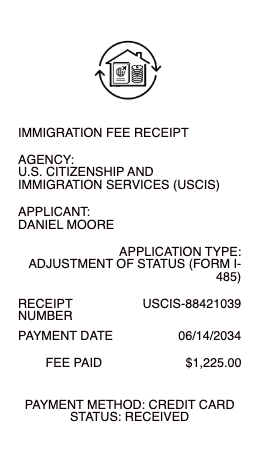
The receipt notice is a document you will use for years
In most transactions the receipt's job ends quickly. An immigration filing fee receipt is different: it arrives as Form I-797C, Notice of Action, and it carries the 13-character receipt number — three letters (such as IOE, MSC, EAC, WAC, LIN, or SRC) followed by ten digits — that identifies your case for its entire life.
That number is how you check case status online, how you reference the case in every enquiry, and how an attorney locates the file. The receipt notice also typically states the priority date and the office processing the case. For many applicants it is the single most important piece of paper they hold until a decision arrives — which can be years.
Receipt does not mean approval — read which I-797C you have
USCIS uses the same form family for very different messages, and the label at the top matters more than the form number. An I-797C can be:
A receipt notice — your filing and fee were accepted; the case exists.
A biometrics appointment notice — when and where to appear for fingerprints and photograph.
An interview or transfer notice.
A rejection notice — the filing was not accepted, commonly for a missing signature, an outdated form edition, or an incorrect fee.
The receipt notice confirms receipt of the case and payment of the filing fee — nothing more. Treating it as an approval, or missing that a notice is actually a rejection, are both common and costly reading errors.
The fee itself: exact, per-form, and unforgiving
Immigration filing fees have three properties that surprise first-time applicants:
They must be exact. An incorrect fee — even slightly wrong, even overpaid in the wrong structure — is a standard reason for rejection of the entire filing, with the package returned and time lost.
They are per form. A case frequently involves several forms, each with its own fee, and fee schedules change — always verify the current amount on the day of filing, not from an old checklist.
They are generally non-refundable. The fee pays for adjudication, not for approval: a denied case does not return the fee.
Where premium processing or biometrics services apply, those are separate fees with separate receipts — keep each one, attached to the form it paid for.
Rejection versus denial — the fee consequences differ
Two words that sound alike and are not: a rejection means the filing was never accepted (wrong fee, missing signature, outdated edition) — the fee is typically returned or not processed, and you refile correctly, but any deadline you were filing against may now be missed. A denial means the case was accepted, adjudicated, and refused — the fee is spent.
The receipt notice is the proof of when a filing was accepted, which matters enormously where eligibility windows and deadlines are involved. This is why applicants keep the I-797C with the copy of the filed forms and the payment record: together they prove what was filed, when, and that it was paid for.
Keeping the immigration file
Keep every I-797C, every fee payment record, and a complete copy of every filing — indefinitely. Immigration histories are cumulative: a filing from a decade ago can matter to today's application, and the receipt numbers are how old cases are found.
If a receipt notice is lost, the receipt number may still be recoverable from your online USCIS account, from your attorney's file, or from USCIS itself with identifying details. Your bank record establishes that the fee was genuinely paid — the amount, date, and payee — and a clear reconstructed record documents that real payment for your files, matching it exactly. It does not replace the I-797C, which is the government's own acknowledgment and the document every downstream process expects.
Frequently asked questions
Everything you need to know about the product and billing.
What is Form I-797C?
USCIS's Notice of Action — the form used for receipt notices, biometrics appointments, interview and transfer notices, and rejections. The receipt-notice version confirms your filing and fee were accepted and carries your 13-character receipt number.
What is a USCIS receipt number?
A 13-character case identifier: three letters (IOE, MSC, EAC, WAC, LIN, SRC) followed by ten digits. It is how you check case status online and how the case is referenced for its entire life.
Does a receipt notice mean my case is approved?
No. It confirms only that USCIS received the filing and the fee. Approval, interviews, and requests for evidence all come later — and some I-797C notices are actually rejections, so read the label.
What happens if I pay the wrong filing fee?
The filing is typically rejected — returned unprocessed. You can refile with the correct fee, but any deadline you were filing against may be missed, which is why verifying the current fee on filing day matters.
Are immigration fees refundable if the case is denied?
Generally no. The fee pays for adjudication, not for a particular outcome — a denied case does not return the fee. A rejected (never accepted) filing is different, and its fee is typically not processed.
How long should I keep immigration receipts?
Indefinitely. Immigration histories are cumulative — decade-old filings can matter to current applications, and the receipt numbers on old I-797C notices are how prior cases are located.