A receipt with a wrong date, amount, or name should be corrected properly, not edited. This guide explains why you never alter an issued receipt, how to issue a corrected one, and what to do when a business gets your details wrong.
Incorrect Receipt Fix
Add custom logo
Edit line items
Choose payment method
Add/remove elements
Customize business information
Choose font
The rule: never alter an issued receipt
When a receipt goes out with an error, the instinct is to fix the document — cross out the wrong figure, write the right one, maybe reprint it with the correction. That instinct is wrong, and following it can turn an honest mistake into something that looks like tampering.
The principle behind every accounting system is the audit trail: an issued document is a record of what happened at the time, and records are corrected by adding to them, never by overwriting them. A receipt that has been altered after issue cannot be trusted, because nobody looking at it can tell whether the change was a correction or a manipulation.
How a business should actually correct one
The right method depends on what went wrong:
Wrong amount charged. Do not edit the receipt. Refund and re-charge correctly, or issue a credit note for the difference. Both leave the original transaction visible and the correction traceable.
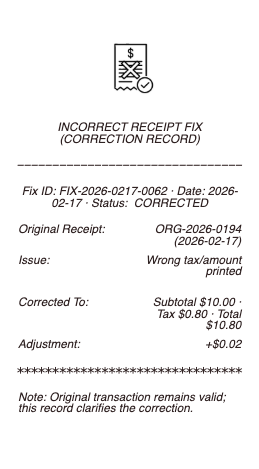
Wrong customer details (name, address, tax number). Issue a corrected receipt that references the original — same transaction, same date, same amount, with the details fixed and a clear reference to the document it replaces.
Wrong date. The transaction date is a fact, not a preference. It cannot be changed to a more convenient one; where the wrong date was printed, a corrected document referencing the original is the answer.
The receipt should never have been issued at all. Void it — and keep the voided document.
Correcting a handwritten receipt
A handwritten receipt in a numbered book has its own protocol, and it is exacting for good reason:
A single line through the error, so the original remains readable.
The correction written beside it.
Initialled by the person making the change.
Never overwrite the figure, and never use correction fluid — both make the document worthless, because an obscured original is indistinguishable from a concealed one.
If the receipt is too badly wrong to salvage, write VOID across it, leave it in the book, and issue the next number. Tearing it out breaks the sequence, and a gap in a numbered run is exactly what an auditor treats as a missing sale.
When a business has your details wrong
As a customer, an incorrect receipt is a practical problem: the wrong company name can invalidate an expense claim, a missing tax number can block a VAT reclaim, and a wrong amount misstates your records.
Ask the merchant for a corrected document rather than an amended one — the phrase that works is "please reissue this correctly, referencing the original". Most businesses do this routinely. Keep both documents: the original and the correction together tell the whole story, and discarding the original leaves a correction that references a document nobody can produce.
Do not fix it yourself. A receipt you have edited is a receipt no employer, insurer, or tax authority should accept, however genuine your intention — and the correction is the merchant's to make.
Reconstructing versus altering — the line that matters
There is a real and important distinction between two things that superficially resemble each other.
Altering an issued receipt means changing the record of a transaction — making it say something other than what happened. That is never acceptable, and no purpose justifies it.
Reconstructing a lost record means documenting a transaction that genuinely occurred, from evidence you already hold, when the original is unavailable. Every field matches the real payment: the actual date, the actual amount, the actual merchant, as your bank statement records them. It is a record for your own files — for an expense claim, a warranty, or your bookkeeping — and it never invents a purchase, changes an amount, or replaces a document the merchant can still reissue. Ask the merchant first; reconstruct only what is genuinely gone.
Frequently asked questions
Everything you need to know about the product and billing.
Can I edit a receipt that has a mistake on it?
No. An issued receipt is a record of what happened, and records are corrected by adding to them, not by overwriting them. An altered receipt cannot be trusted, because nobody can tell whether the change was a correction or a manipulation.
How does a business correct a receipt with the wrong amount?
By refunding and re-charging correctly, or by issuing a credit note for the difference. Both leave the original transaction visible and make the correction traceable — which editing the document does not.
What if my name or company details are wrong on a receipt?
Ask the merchant to reissue a corrected receipt that references the original. Keep both documents: together they tell the whole story, and a correction referencing a missing original is much weaker.
How do I fix a mistake in a handwritten receipt book?
Strike the error through with a single line so the original stays readable, write the correction beside it, and initial it. Never overwrite the figure and never use correction fluid. If it is beyond saving, write VOID across it and keep it in the book.
Can the date on a receipt be changed?
No. The transaction date is a fact about when the payment happened, not a field to be adjusted. Where a wrong date was printed, the fix is a corrected document that references the original.
What is the difference between correcting and reconstructing a receipt?
Correcting changes what a record says about a transaction — never acceptable. Reconstructing documents a transaction that genuinely happened when the original is lost, with every field matching the real payment as your bank statement records it.