A monthly subscription receipt documents a recurring negative-option charge. This guide explains ROSCA and state autorenewal laws after the click-to-cancel rule was vacated, free-trial conversions, and what each month's receipt should show.
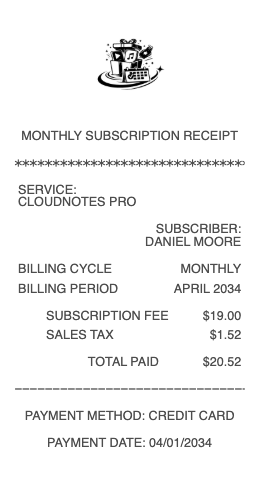
Monthly Subscription Receipt
Add custom logo
Edit line items
Choose payment method
Add/remove elements
Customize business information
Choose font
A monthly subscription is a negative option — the law's term, not an insult
Legally, most monthly subscriptions are negative option plans: silence is treated as consent, and the charge recurs until you affirmatively stop it. That framing matters because it is exactly what consumer law regulates — the situation where doing nothing costs money.
The monthly receipt is the counterweight. It is the one recurring signal that the charge is still happening, at what price, on which card — and the quiet price increase, the double charge, and the subscription you forgot all surface there first. People who read their subscription receipts cancel things; people who don't, fund them.
The click-to-cancel rule is gone — these rules are not
The FTC's "click-to-cancel" rule — which would have required cancellation to be as easy as sign-up — was vacated by the Eighth Circuit on 8 July 2025, days before enforcement was to begin, on procedural grounds. But subscription billing is far from unregulated:
ROSCA (the Restore Online Shoppers' Confidence Act) still requires clear disclosure of the terms, informed consent before charging, and a simple cancellation mechanism for online negative options.
State autorenewal laws now exist in more than half the states, many as strict or stricter than the vacated federal rule — with new laws in Massachusetts, New York, and Connecticut (Connecticut's effective 1 July 2026).
Section 5 of the FTC Act and state UDAP laws still reach deceptive subscription practices generally.
Practical translation: a merchant still has to tell you clearly what recurs, get your consent, and let you out — and your receipts are the record of what they actually charged against that consent.
The free trial that converts
The most disputed monthly charge is the first one — the trial that quietly became a subscription. The pattern is lawful when disclosed, and the dispute is always about what was disclosed.
Protect yourself at sign-up, not at conversion: note the trial end date, the price after conversion, and screenshot the offer terms. When the first receipt arrives, check it against what was promised — the amount, the plan, the billing date. A conversion at a different price than advertised is exactly the kind of discrepancy that a card dispute, or a state attorney general complaint, is built on. And the cancellation confirmation is a receipt too: keep it, because "I cancelled" without evidence is just a claim.
What each month's receipt should show
The service and the plan tier — not just a company name.
The billing period the charge covers.
The amount, and any change from the previous month, with tax separately.
The payment method and its last four digits — which card is being hit matters when cards expire or get replaced.
The next billing date, and how to cancel.
A merchant whose receipts show none of this is telling you something about how they want the relationship to work.
Auditing your subscriptions once a quarter
The practical use of a year of monthly receipts is the audit: list every recurring charge on your statement, match each to a service you still use, and cancel the remainder. Card statements show the merchant; the receipts show the plan and the price history — including the increases that arrived without fanfare.
For business subscriptions, each month's receipt is a deductible expense record, and the run of them evidences the cost cleanly. If one is missing while the charge genuinely happened, your card statement establishes the date, amount, and merchant, and a clear reconstructed record documents that real payment for your files — matching the statement exactly. The provider's billing history, downloadable from your account, remains the better source: it is complete, itemised, and free.
Frequently asked questions
Everything you need to know about the product and billing.
What is a negative option subscription?
One where silence is consent — the charge recurs until you affirmatively cancel. It is the legal term for how most monthly subscriptions work, and it is precisely what ROSCA and state autorenewal laws regulate.
Is the FTC click-to-cancel rule in force?
No. The Eighth Circuit vacated it on 8 July 2025, days before enforcement began, on procedural grounds. But ROSCA, Section 5 of the FTC Act, and autorenewal laws in more than half the states still apply — many as strict as the vacated rule.
What does ROSCA require?
For online negative options: clear disclosure of the material terms, the customer's informed consent before charging, and a simple mechanism to stop recurring charges.
How do I protect myself with a free trial?
At sign-up: note the trial end date and the post-trial price, and screenshot the offer terms. Check the first receipt against what was promised, and keep your cancellation confirmation — without it, 'I cancelled' is just a claim.
What should a monthly subscription receipt show?
The service and plan tier, the billing period covered, the amount with tax and any change from last month, the card charged (last four digits), the next billing date, and how to cancel.
How do I find subscriptions I forgot about?
Audit quarterly: list every recurring charge on your card statement, match each to a service you still use, and cancel the rest. The receipts give you the plan and price history the statement lines don't.