A sports event ticket receipt may cover a single game, a season ticket, or a personal seat licence. This guide explains what a PSL actually buys, how season ticket renewals work, and what the receipt must record.
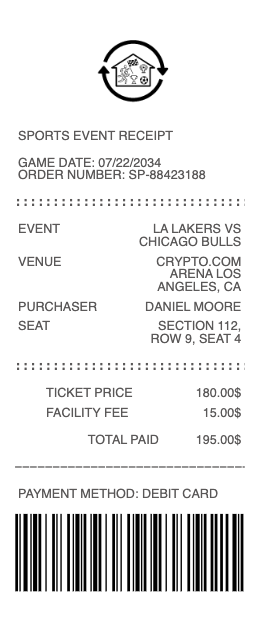
Sports Event Receipt
Add custom logo
Edit line items
Choose payment method
Add/remove elements
Customize business information
Choose font
Three very different purchases wear the same name
"Sports tickets" covers three products with almost nothing in common except the turnstile:
A single-game ticket — one seat, one fixture, done.
A season ticket — every home game, usually at a per-game discount, with the same seat each time and priority access to playoffs and other events.
A personal seat licence (PSL) — and this is the one people misunderstand: a PSL is not a ticket at all. It is a one-off payment for the right to buy a specific season ticket, year after year. You pay for the licence, and then you still pay for the tickets.
PSLs can run to five figures, are treated as transferable assets in many stadiums, and can appreciate or collapse in value with the team's fortunes. Because it is an asset rather than an admission, the PSL paperwork is something you keep permanently, not until the final whistle.
Season tickets: renewal, relocation, and the deadline that matters
Season tickets run on an annual cycle with terms that reward the organised and punish the distracted:
Renewal windows. Existing holders get first refusal, but only until a deadline — and missing it can mean losing seats held for years.
Auto-renewal is increasingly the default, with the card on file charged automatically. Your receipt is where you discover the price rose.
Relocation windows let holders move seats by seniority, which is why your original purchase date can matter years later.
Playoff and cup tickets are often billed separately, sometimes automatically, and sometimes for games that do not happen — with a refund following later.
Keep every season's receipt: seniority, tenure, and any relocation or priority right you hold are usually a function of how long you have held the seats, and your receipts are the evidence of that history.
What the receipt should record
Exactly what was bought — single game, season, or PSL. These are not interchangeable and should never be ambiguous on the document.
The season or fixture, and the seat — section, row, seat number.
The price, with fees itemised separately.
The account number, for a season ticket holder — the identifier all renewals and relocations run on.
For a PSL: the licence terms, transferability, and what happens if you stop buying the tickets.
Corporate and hospitality tickets
Sports tickets are among the most commonly expensed and most frequently disallowed business costs, because of a rule change many businesses still have not absorbed: entertainment is not deductible. A box, a suite, or a ticket taken with a client falls squarely on that side of the line.
The narrow exception is food and drink — potentially deductible as a business meal, but only if separately stated on their own receipt or invoice. Where catering is bundled into the ticket or suite price, the whole amount is generally treated as nondeductible entertainment.
So the practical instruction for anyone buying hospitality: ask for the catering to be invoiced separately. It is a routine request, and it is the difference between a partial deduction and none.
Keeping the record
Keep single-game receipts until the game has been played and any expense claim settled. Keep season ticket receipts for as long as you hold the seats, because tenure has value. Keep PSL documents permanently — it is an asset, and a future sale will require proof of what you bought and what you paid.
Clubs retain account history and can reissue, which is the first route to a missing document. If a record is lost while the purchase genuinely happened, your card statement establishes the date, amount, and seller, and a clear reconstructed record documents that real payment for your files, matching the charge exactly — though for a PSL transfer or a tenure claim, the club's own records are what will actually decide it.
Frequently asked questions
Everything you need to know about the product and billing.
What is a personal seat licence?
A one-off payment for the right to buy a particular season ticket, year after year — it is not a ticket itself. You buy the licence, and then you still pay for the tickets each season. PSLs are often transferable assets and can rise or fall in value.
Why should I keep old season ticket receipts?
Because seniority and tenure usually carry rights — relocation windows and priority access are typically a function of how long you have held seats, and your receipts are the evidence of that history.
What happens if I miss the season ticket renewal deadline?
You can lose seats held for years. Existing holders get first refusal only until the deadline, after which the seats can be released. Many clubs now auto-renew by default, in which case the receipt is where you discover the price changed.
Can I deduct client tickets to a game?
Generally no. Entertainment is nondeductible, and a ticket or suite taken with a client falls on that side of the line. Food and drink may be deductible as a business meal — but only if separately stated on their own receipt rather than bundled into the ticket price.
What should I ask for when buying corporate hospitality?
That the catering be invoiced separately from the ticket or suite. It is a routine request, and it is the difference between being able to deduct the food as a business meal and deducting nothing at all.
What should a sports ticket receipt show?
Exactly what was bought (single game, season, or PSL — never ambiguous), the season or fixture, the precise seat, the price with fees itemised, the account number for a season ticket, and for a PSL the licence terms and transferability.