A convenience store receipt records the smallest, fastest transactions in retail — a coffee, a snack, a top-up of fuel rung inside — and precisely because the purchases are small and often cash, the receipt is the only trace they leave. C-store receipts also carry lines other stores rarely print: an EBT balance, an age-verification note, a fuel-versus-store split. This page explains what a convenience store receipt shows and the situations where that little slip matters.
Convenience Store Receipt
Add custom logo
Edit line items
Choose payment method
Add/remove elements
Customize business information
Choose font
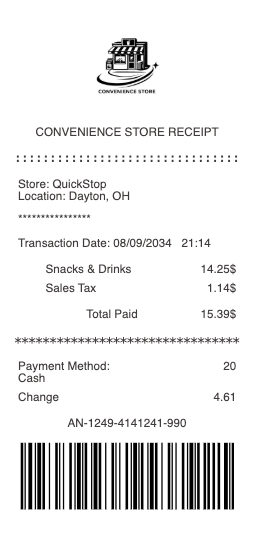
What’s on a Convenience Store Receipt
The store — often a franchise location with a store number
A short itemized list — snacks, drinks, household basics
Fuel as a separate section, if paid inside with the basket
Age-restricted items — tobacco, alcohol, lottery — often with an ID-check note
Subtotal, tax, and total — with taxable and non-taxable items marked
Payment method — cash tendered and change, card, or EBT with a balance line
Date, time, register, and cashier
Small Baskets, Cash, and the Fuel Split
Convenience retail is built on small, frequent, often cash purchases — and a cash purchase leaves no bank trail, so the receipt is the only record the buyer gets. That matters more than it sounds: a $12 cash snack run claimed on a per-diem or expense report needs the slip, because nothing else proves it. The other c-store signature is the fuel split: pay for gas inside along with a basket and the receipt separates the fuel sale (gallons, price per gallon, pump number) from the store items, because fuel is taxed and accounted differently. Drivers expensing fuel should note the split — an expense report usually wants the fuel figure alone, not the coffee that rode along with it. Pay-at-pump receipts are their own thing; the inside receipt is where fuel and merchandise meet on one slip, itemized apart.
EBT Split Tender — and the Balance Line
Convenience stores are everyday SNAP/EBT retailers, and their receipts show how a mixed basket actually settles. SNAP covers eligible food items only — not hot prepared food, not alcohol or tobacco, not household goods — so a mixed purchase runs as a split tender: the register totals the SNAP-eligible items against the EBT card, and the rest is paid by cash or card, with the receipt showing both parts. Two lines make these receipts genuinely useful: the split itself (which items ran on which tender) and the remaining EBT balance, which prints on the receipt after the transaction — for many households the receipt is how they track the month’s remaining benefit. If a split looks wrong — an eligible item charged to cash, or vice versa — the itemized receipt is what gets it corrected at the counter.
Age-Restricted Lines, Lottery, and Records
C-store receipts carry compliance marks most retail never needs. Tobacco and alcohol sales require age verification, and registers log the check — receipts often note the ID prompt, and the store’s records tie the sale to the verifying cashier, because selling to a minor carries license and fine consequences. Lottery runs through a separate state terminal, so tickets usually produce their own slip rather than joining the basket receipt — the ticket itself is the record, and for a win, the signed ticket (not the store receipt) is what pays. For everyday record-keeping, c-store receipts are mostly about expenses: per-diem incidentals, fuel-plus-snack splits on the road, small cash purchases for a business. The habit that works: photograph the slip at the counter — thermal paper this small fades fastest of all, and a $9 cash receipt can’t be reconstructed any other way.
Related store receipts: see also our Grocery Store receipt guide and our Dollar Tree receipt guide.
Create a Convenience Store Receipt
Our generator reproduces a convenience store receipt — store and register, a short itemized basket, tax, tender lines including cash and change, and totals — as a clean PDF when a faded or lost slip needs a legible stand-in for an expense report or your records.
Use it responsibly: recreate only purchases that actually happened, with true items and amounts. Fabricating convenience store receipts to pad expense reports or per-diem claims with cash purchases that never occurred is fraud — small slips are exactly where padding hides, and register journals record every genuine sale. This tool is for legitimate record-keeping only.
Frequently asked questions
Everything you need to know about the product and billing.
What does a convenience store receipt show?
The store (often a franchise with a store number), a short itemized basket, fuel as a separate section if paid inside, age-restricted items with an ID-check note, subtotal, tax, and total with taxable items marked, the tender — cash and change, card, or EBT with a balance line — and the date, register, and cashier.
Why does the receipt separate fuel from store items?
Fuel is taxed and accounted differently from merchandise, so paying for gas inside with a basket produces a receipt with the fuel sale (gallons, price per gallon, pump number) itemized apart from the store items — and an expense report usually wants the fuel figure alone.
How does EBT show on a convenience store receipt?
A mixed basket runs as a split tender: SNAP-eligible food items total against the EBT card, everything else is paid by cash or card, and the receipt shows both parts. The remaining EBT balance also prints after the transaction — for many households, the receipt is the balance tracker.
What items can’t be bought with SNAP at a c-store?
Hot prepared food, alcohol, tobacco, lottery, and household non-food items — SNAP covers eligible groceries only. That’s why the register splits the tender, and why the itemized receipt is what corrects a split if an item lands on the wrong side.
Why don’t lottery tickets appear on the store receipt?
Lottery runs through a separate state terminal, so tickets print their own slip rather than joining the basket receipt. The ticket itself is the record — and for a win, the signed ticket, not the store receipt, is what pays out.
Why photograph small convenience store receipts?
Because small cash purchases leave no bank trail — the slip is the only proof for a per-diem or expense claim — and small-format thermal paper fades fastest of all. A photo at the counter preserves a record that can’t be reconstructed any other way.