A detailing receipt is not a car-wash slip — it documents a premium cosmetic service, from a full interior-and-exterior detail to paint correction or a multi-year ceramic coating, priced in packages that run from tens to many hundreds of dollars. This page covers what it shows, how packages and coatings are priced, and why the receipt matters for warranties and resale.
Detailing Receipt
Add custom logo
Edit line items
Choose payment method
Add/remove elements
Customize business information
Choose font
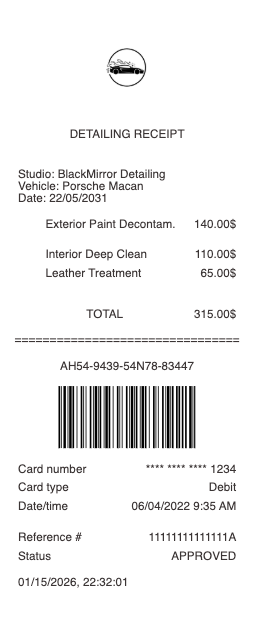
What’s on a Detailing Receipt
Detailer or shop name — a fixed studio or a mobile service that came to you
The vehicle and the service date
The package or services — interior detail, exterior detail, full detail, paint correction, ceramic coating
Add-ons — pet-hair removal, engine bay, headlight restoration, odor treatment
Coating details — product and the coverage/warranty period, on ceramic or paint-protection jobs
Vehicle size tier — sedan, SUV, truck — which drives the price
Total, payment method, and any care instructions
Packages, Tiers, and Ceramic Coatings
Detailing is sold in packages, not by the item, and the receipt names the tier: a basic wash-and-vac at the low end, a full interior-and-exterior detail in the middle, and paint correction and ceramic coating at the top, where prices reach several hundred to over a thousand dollars. Vehicle size scales each tier — an SUV or truck costs more than a sedan. The highest-value line is a ceramic or paint-protection coating, which carries a stated warranty period (often multiple years) — and that warranty lives on the receipt. Reading which package and coating you bought explains the total and, more importantly, records what protection you are entitled to going forward.
Why the Receipt Matters: Coating Warranties and Resale
Two things make a detailing receipt worth keeping rather than tossing. First, ceramic coating warranties: a professional coating is guaranteed for a set number of years, but usually only if you follow the maintenance schedule and, sometimes, return for inspections — the receipt is what proves the coating was applied and when, which any warranty claim requires. Second, resale: a documented detailing and coating history reassures a buyer that a car was cared for cosmetically, and a fresh full detail is standard prep before selling or returning a lease. For enthusiasts and high-value vehicles, the coating receipt is part of the car’s file the same way service records are.
Mobile Detailing, Business Use, and Getting a Copy
Much detailing is now mobile — the detailer comes to your home or office with water and power — and the receipt notes the service location rather than a shop address, with any travel or setup line included. For business use, detailing a company or fleet vehicle, or prepping a dealer’s inventory, is a deductible expense the itemized receipt substantiates, and rideshare drivers detailing for passenger ratings expense it too. For a lost receipt, an established detailer keeps client and coating records — especially important for warranty-backed coatings, where the application date must be provable years later. Keep coating receipts for the full warranty term, and general detail receipts as part of the resale file.
Related auto service receipts: see also our car wash receipt guide and our body shop receipt guide.
Create a Detailing-Style Receipt
Our generator rebuilds a detailing receipt — detailer and vehicle, the package and add-ons, any coating with its warranty period, size tier, and total — as a clean PDF for warranty, resale, or business records when the original is lost.
Use it responsibly: document real detailing at true amounts. Fabricating detailing receipts — to claim a coating warranty that was never applied, or a business expense that did not happen — is fraud. For genuine work, the detailer keeps the record and can reissue it, which is what a coating warranty claim is checked against.
Frequently asked questions
Everything you need to know about the product and billing.
What is the difference between detailing and a car wash?
A car wash is a quick clean; detailing is a premium cosmetic service — full interior and exterior work, paint correction, and ceramic coating — sold in packages that can run into the hundreds or more. The receipt reflects the package and any coating, not a single wash charge.
How is detailing priced on the receipt?
By package tier and vehicle size: basic wash-and-vac, full interior-and-exterior detail, or paint correction and ceramic coating, with SUVs and trucks costing more than sedans. Add-ons like pet-hair or odor treatment are separate lines.
Why does a ceramic coating warranty need the receipt?
A professional coating is guaranteed for a set number of years, usually conditional on following the maintenance schedule and sometimes returning for inspections. The receipt proves the coating was applied and when, which any warranty claim requires.
Does a detailing receipt help at resale?
Yes — a documented detailing and coating history reassures buyers a car was cared for cosmetically, and a full detail is standard prep before selling or a lease return. Keep it in the vehicle’s file with service records.
Do mobile detailers give receipts?
Yes — a mobile detailer’s receipt notes the service location rather than a shop address and may include a travel or setup line. Established detailers keep client and coating records for warranty purposes.
Can I expense car detailing?
For a company or fleet vehicle, dealer inventory prep, or rideshare driving, detailing is a deductible business expense the itemized receipt substantiates. Personal detailing generally is not deductible.