A Dior receipt is the paper (or emailed) record of a purchase from one of LVMH’s flagship maisons — and where it came from matters, because Dior sells through its own boutiques and through concessions inside department stores, whose tills differ even though the counter is Dior’s. The receipt lists the advisor, date, and each piece by its reference code, the number that later unlocks boutique after-sales — repairs, hardware service, alterations — and that a resale buyer will match against the item’s tag. For a Lady Dior or Saddle destined to hold value, that dated reference line is the beginning of provenance.
Dior Receipt
Add custom logo
Edit line items
Choose payment method
Add/remove elements
Customize business information
Choose font
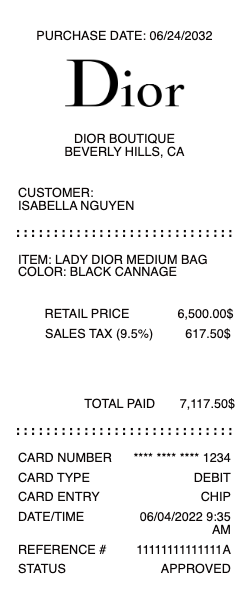
Reading a Dior Receipt
Dior sells through two channels that produce slightly different paperwork: the house’s own boutiques, and concessions inside department stores — where the till may belong to the host store even though the counter, staff, and stock are Dior’s. A boutique receipt lists the location and advisor, the date, and each piece by its reference/style code, matching the reference on the item’s tag or dust-bag label. As an LVMH maison, Dior handles after-sales through its boutiques: repairs, hardware service, and alterations start with proof of purchase, so the receipt (or its emailed digital twin) is the document that opens that door. For handbags and fine pieces destined for resale someday, the dated receipt tied to the reference code is the start of the item’s provenance file.
Boutique purchases add a human detail worth keeping: the client advisor. Dior boutiques operate on assigned advisors who maintain client books — the advisor's name on or with the receipt is the fastest route back into the house's own records for aftercare, repairs, or a copy of the paperwork years later.
Authentic Dior Receipts on the Sneaker Resale Market
Dior B30, B22, and B23 sneakers — and the Air Jordan 1 Dior collaboration — are heavily counterfeited and resold. A genuine Dior receipt is one of the strongest authentication signals on StockX, GOAT, and Vestiaire Collective. Authentic Dior receipts show the precise style code (e.g. B30 grey 3SN289ZIR), boutique address, sales associate ID, and original retail price.
How to Get a Dior Receipt Online
Dior.com automatically emails a receipt for every online order. In-store boutique purchases produce a printed receipt; an emailed copy can be requested at checkout. For older purchases, contact the original boutique with the date and your name on file — Dior maintains transaction records for many years and can typically reprint or verify a receipt for warranty, insurance, or resale purposes.
Dior Fashion, Beauty, and Sauvage Receipts
Dior receipts vary by product line. A Dior Fashion receipt (handbags, ready-to-wear, sneakers) shows the boutique branding and style number. A Dior Beauty receipt (Sauvage, Miss Dior, Hypnotic Poison, skincare) issued at a department-store counter (Saks, Nordstrom, Sephora) shows the host retailer's branding with a Dior concession line. Both share the corporate Christian Dior footer.
Related luxury fashion receipts: see also our Chanel receipt guide and our Louis Vuitton receipt guide.
For handbags and fine jewellery, the receipt travels with the item's own credentials — the authenticity elements Dior builds into the product line differ by category, but the resale market reads them together with the purchase paperwork: the bag with its receipt from a named boutique outsells the same bag with a story. The receipt is the provenance document the house itself will never reissue to a second owner.
A Word on Honest Use
Rebuild a Dior receipt only when the purchase was real — replacing a lost original for an expense report, an insurance schedule, or your own provenance records. Using a fabricated receipt to dress up a counterfeit, bolster a resale listing, or claim value that never existed is fraud, and no document changes what an item is: authentication rests on the piece itself, its materials, and its reference codes. Dior is a trademark of its owner; this independent tool is for legitimate record-keeping only.
Frequently asked questions
Everything you need to know about the product and billing.
What does an authentic Dior receipt look like?
An authentic Dior receipt is typed (never handwritten), uses the Christian Dior header, lists each item with its style code (e.g. B30 sneakers as 3SN289ZIR), shows the sales associate ID, the boutique address, and the original retail price in local currency.
How do I get a Dior receipt online?
Dior.com emails a receipt automatically for every online order. In-store boutique purchases produce a printed receipt; you can request an email copy at checkout. Order history is also visible in your Dior.com account under Orders.
Why do Dior B30 / B22 sneaker resellers ask for the receipt?
Dior sneakers are heavily counterfeited. On StockX, GOAT, and Vestiaire Collective, the receipt is one of the strongest authentication signals — it confirms the style code, original boutique, and retail price, all of which can be cross-referenced with the shoe. The same logic extends to handbags — the receipt from a named boutique is the provenance document a second owner can never obtain from the house.
Does Dior email receipts after a boutique purchase?
Yes. Dior boutiques offer an emailed receipt on request at checkout — the sales associate enters your email and a digital copy is sent in addition to the printed one. The format is the same as the printed boutique receipt.
How do I get a copy of an old Dior receipt?
Contact the original Dior boutique directly with the date of purchase and your name on file. Dior maintains transaction records for many years and can typically reprint or verify the receipt for warranty, insurance, or resale purposes. If a client advisor served you, name them in the request — boutique client books are the fastest route back into the house's purchase records.
Is a Dior beauty receipt different from a Dior fashion receipt?
Yes. Dior Beauty purchases (Sauvage, Miss Dior, skincare, makeup) made at department-store counters (Saks, Nordstrom, Sephora) show the host retailer's branding with a Dior concession line. Dior Fashion receipts (boutique-issued) show the Dior branding directly.