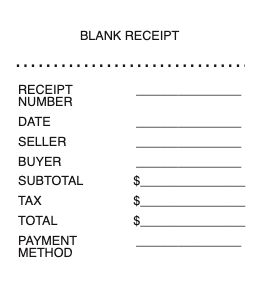
Overview of a Blank Receipt
A blank receipt is a flexible starting point with no pre-filled information. It allows you to enter transaction details manually based on the specific situation.
This format is useful when there is no predefined template or when flexibility is more important than branding or structure.
What a Blank Receipt Includes
A typical blank receipt includes fields for:
receipt number
date
seller and buyer details
item or service description
subtotal
tax
total amount
payment method
Instead of describing a fixed purchase, it provides a structure that can be filled in as needed.
Key Characteristics of Blank Receipts
What makes this format distinct is its adaptability. The same layout can be used across many different scenarios, from simple cash payments to custom business transactions.
Because everything is entered manually, accuracy depends entirely on the person completing the receipt.
Common Uses of Blank Receipts
Blank receipts are often used for:
offline environments
quick handwritten or digital records
replacing a missing document
custom or one-off transactions
They are especially useful when no automated system or predefined template is available.
Structure and Format
The structure is intentionally minimal. Most blank receipts follow a predictable flow:
identification details at the top
transaction details in the middle
totals at the bottom
There are no logos, fixed branding, or predefined product listings, making the format highly adaptable.
Important Notice (Legal Use)
This example should not be used for misleading, fraudulent, or illegal purposes.
When This Format Is Useful
A blank receipt format is useful when you need a flexible layout that can be adjusted to almost any transaction or documentation scenario.