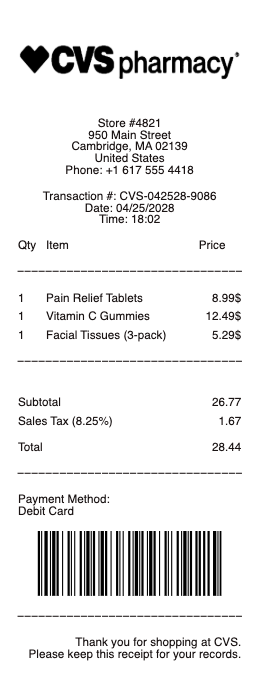
Overview of a CVS Receipt
A CVS-style receipt reflects a mix of everyday retail and pharmacy-related purchases. It captures both general consumer items and health-related products in a single transaction. The format is practical and data-focused, prioritizing clarity over presentation.
What a CVS Receipt Includes
A typical CVS-style receipt includes:
store identification (location, number, contact details)
transaction reference or receipt number
date and time of purchase
itemized list of products
unit prices and quantities
subtotal and tax
total amount paid
payment method
barcode or internal reference
Depending on the purchase, descriptions may include:
over-the-counter medication
personal care items
household essentials
wellness-related products
Item naming is usually functional, not branded for marketing. The goal is clarity and identification.
Why CVS Receipts Are Often Kept
These receipts are frequently used beyond simple purchase confirmation.
They are commonly required for:
health expense tracking
reimbursement for medical-related purchases
insurance documentation (in some cases)
personal records for supplements or medication
returns and product verification
Because of the nature of items sold, receipts may carry more long-term relevance than typical retail transactions.
Structure and Format
CVS receipts tend to follow a linear and data-heavy layout.
They prioritize:
readability
traceability
transaction verification
Not design.
In many cases, they also include additional printed sections such as promotions or store-generated offers. These are separate from the actual transaction data and do not affect the financial record.
Important Notice (Legal Use)
Receipts from pharmacy environments can relate to health and personal data.
This example is provided strictly for:
illustrative
educational
formatting reference
It does not represent an official CVS-issued document.
It does not confirm any real purchase, prescription, or medical transaction.
It must not be used to:
fabricate health-related records
misrepresent medical or pharmacy purchases
support reimbursement claims based on false data
create documentation for insurance or tax purposes that is not accurate
Any receipt used in real scenarios must reflect a legitimate transaction and comply with applicable regulations, including financial, tax, and health-related reporting requirements.
When This Format Is Useful
A CVS-style receipt format is most relevant when you need:
a clear retail + pharmacy hybrid structure
itemized everyday and health-related purchases
simple but traceable transaction records
It reflects a category where retail meets basic healthcare documentation.