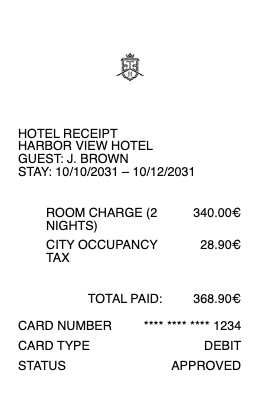
Overview of a Hotel Receipt
A hotel receipt documents the full cost of a stay and serves as official proof of accommodation. It is commonly required for business travel reimbursements, expense reports, and tax documentation.
Unlike simple retail receipts, a hotel receipt reflects a multi-day service. It combines room charges, taxes, and additional services into one structured summary tied to a specific stay.
What a Hotel Receipt Includes
A typical hotel-style receipt includes:
hotel name and location
guest name and reservation details
check-in and check-out dates
number of nights stayed
room rate per night
total accommodation cost
taxes (e.g. city tax or occupancy tax)
additional charges (e.g. minibar, parking, breakfast, services)
total amount paid
payment method
transaction reference
Charges are typically calculated per night and aggregated into a final total.
Key Characteristics of Hotel Receipts
What makes this format distinct is its time-based structure. Costs are calculated over the duration of the stay rather than as a single transaction.
Hotel receipts often include multiple pricing layers:
base room cost
nightly calculation (rate × nights)
additional services
local taxes and fees
This creates a more detailed and structured breakdown compared to standard receipts.
Common Uses of Hotel Receipts
Hotel receipts are widely used for:
business travel reimbursement
tax deduction documentation
corporate accounting and audits
proof of stay for visa or administrative purposes
personal expense tracking
Because of their role in reporting and compliance, accuracy is critical.
Structure and Format
The format is designed for clarity and verification. Key elements such as dates, guest identity, and totals are easy to locate.
Formats may vary depending on:
country and local tax rules
hotel chain or independent property
booking method (direct, agency, or platform)
type of stay (business, leisure, long-term)
There is no single universal format.
Important Notice (Legal Use)
This example is provided strictly for illustrative, educational, and formatting purposes only. It does not represent an official hotel-issued document and does not confirm any real stay.
It must not be used to misrepresent accommodation, create false records, or support any fraudulent or illegal activity.
Any receipt used in practice should reflect a legitimate stay and comply with applicable laws and reporting requirements.
When This Format Is Useful
A hotel-style receipt format is useful when you need a structured document that clearly shows accommodation costs over time with itemized charges and totals.