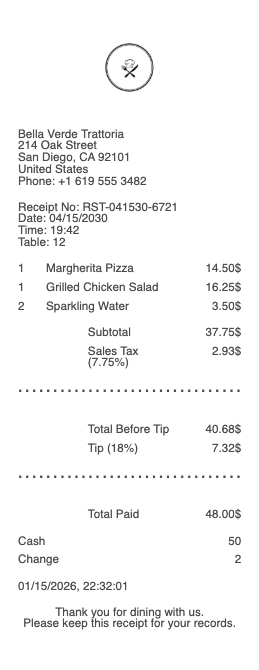
Overview of a Restaurant Receipt
A restaurant receipt reflects a live dining experience rather than a single purchase. Orders are placed over time, with items added, changed, or shared throughout the meal. The receipt captures how the final total was built from these decisions.
Instead of just listing products, it shows the progression from food and drinks to tax, tip, and total paid.
What a Restaurant Receipt Includes
A typical restaurant-style receipt includes:
restaurant name and location
date and time of service
table, order, or check number
itemized list of food and beverages
subtotal before tax
sales tax
gratuity or tip
final amount paid
payment method
Some receipts may also include server information, guest count, or separate tip lines.
Key Characteristics of Restaurant Receipts
What makes this format distinct is the layered total structure. The final amount is built step by step:
items → subtotal
subtotal → tax
tax → tip
tip → total paid
This layered calculation reflects how dining transactions are processed and recorded.
Receipts often include multiple items such as drinks, appetizers, mains, desserts, and extras, making them detailed yet easy to review.
Common Uses of Restaurant Receipts
Restaurant receipts are commonly used for:
business meal reimbursements
per diem or travel expenses
personal budgeting
client entertainment records
reviewing itemized charges
Because of their role in expense reporting, clear separation between totals is essential.
Structure and Format
The format is designed for clarity and auditability. It allows users to quickly understand how the total was calculated across multiple items and charges.
Formats may vary depending on country, payment system, restaurant type, and whether the order was dine-in, takeaway, or delivery.
Important Notice (Legal Use)
This example is provided for illustrative, educational, and formatting purposes only. It does not represent an official restaurant-issued document and does not confirm any real meal or transaction.
It must not be used to misrepresent dining expenses, create false records, or support any fraudulent or illegal activity.
Any receipt used in practice should reflect a legitimate transaction and comply with applicable laws, policies, and reporting requirements.
When This Format Is Useful
A restaurant-style receipt format is useful when you need a structured layout that clearly shows itemized meal charges together with tax, gratuity, and final totals.