An electrician receipt documents licensed electrical work — a panel upgrade, new wiring, an outlet or fixture, a fault traced — and it carries weight a handyman slip does not, because electrical jobs often involve a permit, an inspection, and a licensed contractor’s number. This page covers what the receipt shows and why homeowners, landlords, and insurers rely on it.
Electrician Receipt
Add custom logo
Edit line items
Choose payment method
Add/remove elements
Customize business information
Choose font
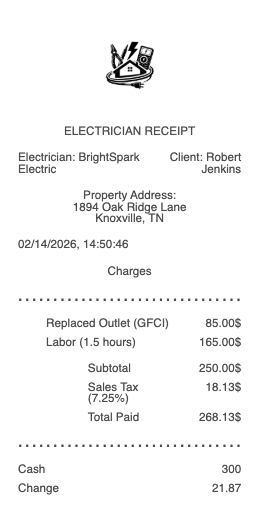
What’s on an Electrician Receipt
The electrician or company name and license number — the credential that separates permitted work from unlicensed
Customer name and job address, and the service date
The work performed — itemized: panel, circuits, outlets, fixtures, fault diagnosis
Service-call or trip fee, common for electrical visits
Labor — hourly or flat-rate per task — and materials (wire, breakers, devices)
Permit and inspection lines, where the job required them
Total, payment method, and any warranty on the work
Permits, Inspections, and Why the License Number Matters
Electrical work is regulated for safety, and the receipt is where that shows. Many jobs beyond a simple fixture swap — a panel upgrade, a new circuit, a rewire — require a permit pulled by a licensed electrician and an inspection by the local authority, and both may appear as lines on the receipt. The electrician’s license number is the detail that matters most: it is what proves the work was done by a qualified contractor, which insurers, home inspectors, and buyers all check. Unpermitted electrical work is a classic problem at a home sale or after a claim, so a receipt showing the license, the permit, and the passed inspection is genuinely valuable documentation — keep it with the home records, not in a drawer.
Service Calls, Labor, and Materials
Electricians typically structure the bill in three parts, and reading them prevents surprises. A service-call or diagnostic fee covers the visit and the time to find the fault — charged even if the fix is quick. Labor then runs hourly or as a flat rate per defined task (install a ceiling fan, add a dedicated circuit), and materials — breakers, wire, devices, fixtures — are itemized separately, sometimes marked up. Emergency and after-hours calls carry premium rates that should be stated upfront and shown on the receipt. For a business or rental, splitting labor from materials matters for how the expense and any depreciation are recorded, which is why the itemized receipt beats a lump total.
Homeowners, Landlords, Insurance, and Warranties
Three parties lean on electrician receipts. Homeowners keep them as proof of upgrades that add value and satisfy inspectors at resale. Landlords file them as deductible maintenance and as evidence that electrical safety obligations were met — important if a tenant issue ever arises. And insurers may require proof that electrical work behind a claim (a fire, a fault) was done by a licensed contractor to a code, with the receipt and permit as that proof. Many electricians also warranty their labor for a period; the receipt is what activates that warranty if the same issue recurs. Keep it as long as the warranty runs and the property is owned.
Related home service receipts: see also our IT Services receipt guide and our Plumber receipt guide.
Create an Electrician-Style Receipt
Our generator rebuilds an electrical-work receipt — electrician and license details, job address, itemized work, service-call fee, labor and materials, any permit line, and total — as a clean PDF for home, rental, or business records when the original is lost.
Use it responsibly: document real work by a real licensed electrician at true amounts. Fabricating electrician receipts — to fake a permit, an inspection, or licensed work for a sale, insurance claim, or landlord obligation — is fraud, and on electrical safety it can have serious consequences. For genuine work, the electrician can reissue the receipt and permit records.
Frequently asked questions
Everything you need to know about the product and billing.
What should an electrician receipt include?
The electrician and license number, the customer and job address, the itemized work, a service-call fee, labor and materials separately, any permit and inspection lines, the total, and any warranty on the work.
Why does the electrician’s license number matter on the receipt?
It proves the work was done by a qualified, licensed contractor — what insurers, home inspectors, and buyers check. Unpermitted or unlicensed electrical work causes problems at a home sale or after a claim.
Do electrical jobs need a permit and inspection?
Many do — panel upgrades, new circuits, and rewires typically require a permit pulled by a licensed electrician and a local inspection. Both may appear as lines on the receipt and are worth keeping with home records.
What is a service-call fee on an electrician receipt?
A charge for the visit and diagnostic time to find the fault, billed even when the fix is quick. Labor and materials are then itemized on top, with emergency or after-hours calls at premium rates.
Why do landlords and homeowners keep electrician receipts?
Homeowners use them as proof of value-adding upgrades at resale; landlords file them as deductible maintenance and evidence of meeting electrical safety obligations. Both support inspections and any dispute.
Does an electrician receipt cover a warranty?
Often — many electricians warranty their labor for a period, and the receipt is what activates that warranty if the same issue recurs. Keep it as long as the warranty runs.