A graphic design receipt records payment for creative work — a logo, a brand identity, marketing artwork — and its most important details aren’t the price but the rights: who owns the final design, and which source files the client receives. A logo receipt that doesn’t address copyright can leave a client unable to trademark their own mark. This page explains what a graphic design receipt should capture, for both designer and client.
Graphic Design Receipt
Add custom logo
Edit line items
Choose payment method
Add/remove elements
Customize business information
Choose font
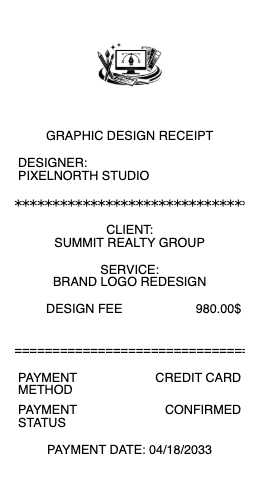
What’s on a Graphic Design Receipt
Designer and client, with a project or invoice reference
The package or deliverable — logo, brand identity, specific artwork
Rounds of revisions included, and the rate for extra ones
Deliverable file formats — and whether editable source files are included
Rights transfer — copyright assignment or a usage license
Pass-through licenses — fonts or stock images purchased for the project
Deposit, balance, amount paid, and method
Copyright and Rights Transfer — Who Owns the Logo
This is the detail that matters most and gets overlooked. Under copyright law, the designer owns what they create by default — so unless rights are transferred in writing, a client who paid for a logo may hold only a limited license, not ownership. That becomes a real problem if they later try to trademark the mark or need to prove they own it. A proper graphic design receipt (with the contract) should state the arrangement: full copyright assignment to the client on final payment, or a defined usage license with limits. Many designers assign rights only after the balance is paid, which the receipt can note. For the client, the receipt is part of the paper trail proving they own the design they’re building a brand on — which is why the rights line is more important than the fee line.
Deliverables, File Formats, and Revisions
Graphic work is delivered as files, and the receipt should say which. A logo package typically includes multiple formats — vector files (AI, EPS, SVG) that scale infinitely for print and signage, plus raster (PNG, JPG) for screen — and the key question is whether editable source files are included or kept by the designer. That distinction affects price and the client’s future flexibility, so it belongs on the record. Revisions are the other common friction point: packages include a set number of revision rounds, and work beyond that is billed as an add-on. Stating the included rounds — and the rate for extras — on the receipt or invoice prevents the “just one more change” spiral from going unbilled. Naming the formats and revision terms turns a vague “design work” line into a record of exactly what was delivered.
Font/Stock Licensing, Income Records, and Copies
Designs often incorporate licensed assets — a commercial font, a stock photo or icon — and those licenses have terms the client inherits. Designers either fold the cost in or bill it as a pass-through, and noting it on the receipt clarifies that, for example, an extended font license was purchased for the project. For the designer, these receipts are freelance or studio income with no tax withheld, so the receipts issued total reportable income and the asset/software receipts kept offset it as deductions. Keeping each project’s receipts paired with its agreement documents the scope, the rights transferred, and the licensed assets — a clean record if a client later disputes ownership or a revision. Copies are simple to reissue from your invoicing tool; just make sure the reissued receipt still states the rights and formats, not only the amount.
Related creative service receipts: see also our Photography receipt guide and our Web Design receipt guide.
Create a Graphic Design Receipt
Our generator produces a clean graphic design receipt — designer and client, the deliverable, revision terms, file formats, rights transferred, any licensed assets, and the total — as a PDF you can send a client or keep for your income records.
Use it responsibly: recreate only real work and payments, with their true amounts. Fabricating design receipts to misstate income or invent expenses is fraud, and misrepresenting a rights transfer can create genuine legal exposure over who owns a logo or brand — the figures should match your return and the rights should match your contract. This tool is for legitimate record-keeping only.
Frequently asked questions
Everything you need to know about the product and billing.
What does a graphic design receipt show?
The designer and client with a project reference, the deliverable (logo, brand identity, artwork), included revision rounds and the rate for extras, the file formats delivered and whether source files are included, the rights transferred, any pass-through font or stock licenses, and the amount paid.
Who owns a logo after I pay for it?
Not automatically you. The designer owns their creation by default, so unless rights are transferred in writing, you may hold only a limited license. That matters if you later try to trademark the mark, so the receipt and contract should state a copyright assignment or defined license.
What file formats should a logo package include?
Usually vector files (AI, EPS, SVG) that scale infinitely for print and signage, plus raster formats (PNG, JPG) for screen. A key question is whether editable source files are included or kept by the designer — it affects price and your future flexibility, so it belongs on the receipt.
How are revisions handled on a graphic design receipt?
Packages include a set number of revision rounds, and work beyond that is billed as an add-on. Stating the included rounds and the rate for extras on the receipt or invoice prevents unbilled “just one more change” requests from piling up.
What are pass-through licenses on a design receipt?
Costs for licensed assets used in the project — a commercial font, a stock photo or icon — that the designer bills through to the client. Noting them clarifies that, say, an extended font license was purchased, and reminds the client the license terms carry over to them.
Why do designers transfer rights only after final payment?
It protects the designer: until the balance is paid, the client holds no ownership of the work. The receipt can note that copyright assigns on final payment, which is both an incentive to pay and a clear record of when ownership actually changed hands.