A jewelry store receipt is more consequential than most retail slips, because what you bought may need to be insured, appraised, serviced, and one day passed on. Whether from a national chain or an independent jeweler, the receipt itemizes the piece and connects to the two documents that matter most for fine jewelry: an independent diamond certificate and an insurance appraisal. This page explains what it shows and how those pieces fit together.
Jewelry Store Receipt
Add custom logo
Edit line items
Choose payment method
Add/remove elements
Customize business information
Choose font
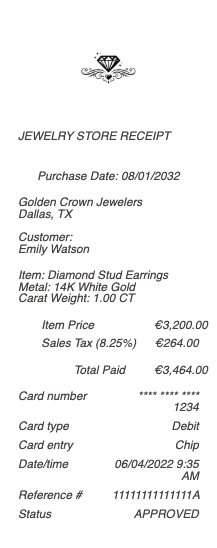
What’s on a Jewelry Store Receipt
The store and purchase date
The piece — described by metal (gold karat, platinum), gemstone, and setting
Diamond/stone specs — carat, and often cut, color, and clarity (the 4 Cs)
The price paid, any financing or layaway, and tax
Warranty or protection plan details
Reference to a diamond certificate (GIA, IGI) if applicable
Sizing, engraving, or appraisal notes
The Receipt, the Diamond Certificate, and the Appraisal
Fine jewelry involves three documents that people often conflate. The receipt proves what you paid and when. A diamond (or gemstone) certificate from an independent lab — most authoritatively the GIA, also IGI and others — grades the stone’s 4 Cs objectively and is separate from the store; it describes the stone, not the price. An appraisal is a valuation, usually for insurance, stating a replacement value (which may differ from what you paid). For a significant purchase you may end up with all three, and they do different jobs: the certificate authenticates and grades the stone, the appraisal sets an insurable value, and the receipt records the transaction. Knowing the difference prevents a common mistake — assuming a store’s own appraisal or a certificate is “the receipt,” or that a receipt alone is enough to insure a ring. Keeping all three together is the right approach for anything valuable.
Protection Plans and the Inspection Catch
Jewelry stores, especially chains, heavily promote warranty and protection plans — covering resizing, repairs, stone replacement, and a “lifetime” diamond guarantee — and the receipt or plan document sets the terms. There’s a crucial catch buyers miss: many lifetime plans require you to bring the piece in for inspection at regular intervals (often every six months) and have the inspection logged, or the coverage is voided. Miss the inspections and a later claim (a lost stone, for instance) can be denied. So the receipt and plan matter as an ongoing obligation, not just a point-of-sale add-on — keeping the inspection record with the receipt is what keeps the guarantee alive. Weighing whether a protection plan is worth its cost is a separate question, but if you buy one, understanding the inspection requirement is essential, because it’s the most common reason these plans fail to pay out.
Insurance, Financing, and Records
For insurance, scheduling jewelry on a homeowner’s policy or a standalone jewelry rider requires proof of value — the receipt plus an appraisal, and the diamond certificate strengthens the file. Insurers want a current valuation because fine jewelry can change in value, so appraisals are periodically updated. Many jewelry purchases involve financing or layaway (store credit cards, promotional plans), and the receipt documents the terms and what was paid. For records, keep the receipt, certificate, appraisal, and any protection-plan and inspection documents together — that set supports an insurance claim, a warranty repair, a resale, or an inheritance. To get a copy, most jewelers keep purchase records under your account and can reprint. Because these are often milestone or heirloom purchases, treating the paperwork as part of the asset — stored safely, kept current — is simply prudent.
Related fine jewelry receipts: see also our Cartier receipt guide and our Tiffany & Co receipt guide.
Create a Jewelry Store Receipt
Our generator produces a clean jewelry store receipt — store, itemized piece with metal and stone details, price, and warranty reference — as a PDF when you need a legible copy for insurance scheduling, a warranty record, or your own files.
Use it responsibly: recreate only a genuine piece you actually purchased, with its true details. Fabricating a jewelry receipt to inflate an insurance claim, misrepresent a stone’s value, or fake provenance is fraud — an insurance claim relies on the receipt, an independent appraisal, and often a lab certificate, all of which can be checked, and the store’s own records are the authoritative source. This tool is for legitimate record-keeping only.
Frequently asked questions
Everything you need to know about the product and billing.
What does a jewelry store receipt show?
The store and date, the piece by metal, gemstone, and setting, stone specs like carat and the 4 Cs, the price paid, any financing or layaway and tax, warranty or protection plan details, a reference to a diamond certificate (GIA, IGI) if applicable, and sizing or engraving notes.
What’s the difference between a jewelry receipt, certificate, and appraisal?
The receipt proves what you paid. A diamond certificate from an independent lab (GIA, IGI) grades the stone’s 4 Cs objectively. An appraisal is a valuation, usually for insurance, stating replacement value. They do different jobs, and a valuable piece often has all three.
What is a diamond certificate?
An independent lab report — most authoritatively from the GIA — grading a diamond’s cut, color, clarity, and carat objectively, separate from the store. It describes and authenticates the stone rather than the price, and it strengthens an insurance file alongside the receipt and appraisal.
Do jewelry protection plans require inspections?
Often yes — many lifetime plans require bringing the piece in for inspection at regular intervals (commonly every six months) and having it logged, or the coverage is voided. Missing inspections is the most common reason a later claim, like a lost stone, is denied.
Do I need a jewelry receipt for insurance?
Yes — scheduling jewelry on a policy or a jewelry rider requires proof of value, which is the receipt plus an appraisal, with a lab certificate strengthening the file. Insurers want a current valuation, so appraisals are periodically updated for coverage limits.
How do I get a copy of a jewelry store receipt?
Most jewelers keep purchase records under your account and can reprint a receipt. Keep it together with the diamond certificate, appraisal, and any protection-plan and inspection records — that full set supports a claim, a warranty repair, a resale, or an inheritance.