A massage receipt sits on a line most people don’t realize exists: whether the massage was a spa indulgence or medical care. That distinction decides everything about the receipt — whether it can be reimbursed, whether a tip belongs on it, and what a therapist needs to record for their own taxes. This page explains what a massage receipt shows and how the spa-versus-therapeutic split changes how you use it.
Massage Receipt
Add custom logo
Edit line items
Choose payment method
Add/remove elements
Customize business information
Choose font
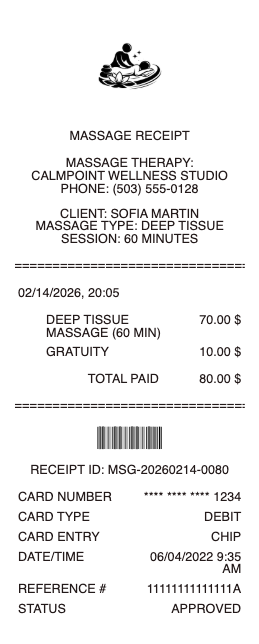
What’s on a Massage Receipt
Business and therapist name — often the therapist’s LMT license number
Client name and the date of service
The service and length — e.g. 60- or 90-minute Swedish, deep tissue, sports
The fee, plus any gratuity line at a spa
Add-ons — aromatherapy, hot stones, or a membership credit applied
Payment method and total
For medical massage, a referral or diagnosis reference if it’s an insurance-facing receipt
Spa vs Medical Massage — the Reimbursement Line
This is the distinction that governs the receipt. A spa or relaxation massage is a personal expense: it is not HSA/FSA-eligible and not insurance-reimbursable, and its receipt is simply proof of a purchase (often with a gratuity line). A medical or therapeutic massage can be eligible — but only when it’s prescribed by a doctor for a specific diagnosed condition, documented with a Letter of Medical Necessity. With that letter, the massage becomes a qualified HSA/FSA expense and the receipt substantiates it; without it, the same account will reject the claim. Massage delivered as part of physical-therapy or chiropractic care is billed differently — under the provider’s codes — and isn’t a standalone spa receipt at all. Knowing which kind you had tells you immediately whether the receipt can do more than record a payment.
Gratuity, Gift Certificates, and Memberships
Massage businesses have a few receipt quirks worth understanding. Gratuity is customary at spas and usually appears as its own line (or is added at the desk) — useful to see separately for your own budgeting, and relevant because a tip isn’t part of a reimbursable medical fee even when the massage is. Gift certificates generate two records: one when purchased, one when redeemed, so a redemption receipt may show a $0 balance due against a prepaid certificate. And membership models — Massage Envy is the best-known, with monthly dues that bank a session credit that rolls over — mean the receipt often shows a member rate or an applied credit rather than a full walk-in price. When a charge looks unfamiliar, the receipt’s member-rate or credit line usually explains it.
For Therapists: Records, Taxes, and Copies
If you’re a licensed massage therapist running your own practice, the receipts you issue are also your bookkeeping. Each one documents income for your taxes, and clean per-session records — client, date, service, amount — are what a self-employed therapist needs at year-end and for any business deductions (supplies, oils, room rent). Including your LMT license number adds credibility and is sometimes required for a client’s medical-massage claim. For clients, getting a copy is usually easy: spas and clinics keep transaction records and can reprint or email a receipt, and membership platforms store history in the client’s account. Whether you need it for a reimbursement, a gift-certificate record, or your own accounting, ask for an itemized receipt that separates the service fee from any tip or membership credit.
Related medical receipts: see also our Hospital receipt guide and our Physiotherapy receipt guide.
Create a Massage Receipt
Our generator produces a clean massage receipt — business and therapist details, the service and length, the fee, gratuity, and any membership credit — as a PDF when you need a legible copy for your records, a client, an HSA/FSA claim backed by a Letter of Medical Necessity, or your practice’s bookkeeping.
Use it responsibly: recreate only real sessions with their true fees. Fabricating a massage receipt to claim an HSA/FSA or insurance reimbursement without the required medical prescription, or to misstate business income, is fraud — account administrators and the IRS can require the underlying documentation. This tool is for legitimate record-keeping only.
Frequently asked questions
Everything you need to know about the product and billing.
What does a massage receipt show?
The business and therapist (often with an LMT license number), the client and date, the service and length (e.g. 60-minute deep tissue), the fee plus any gratuity, add-ons or membership credits, the payment method and total, and — for medical massage — a referral or diagnosis reference.
Is a massage HSA or FSA eligible?
A spa or relaxation massage is not. A therapeutic massage becomes eligible only when a doctor prescribes it for a specific diagnosed condition and provides a Letter of Medical Necessity. With that letter the receipt substantiates the claim; without it, the account will reject it.
What’s the difference between a spa and a medical massage receipt?
A spa receipt is proof of a personal purchase, usually with a gratuity line, and isn’t reimbursable. A medical massage receipt — backed by a prescription — can support an HSA/FSA claim. Massage given within physical therapy or chiropractic care is billed under the provider’s codes instead.
Why does my massage receipt show a member rate or credit?
Membership models like Massage Envy charge monthly dues that bank a session credit which rolls over, so the receipt shows a member rate or an applied credit rather than the full walk-in price. That credit line usually explains an otherwise unfamiliar charge.
Do I include the tip on a massage receipt for reimbursement?
Gratuity is customary at spas and appears as its own line, but a tip isn’t part of a reimbursable medical fee even when the massage qualifies. Keep the service fee separate from the tip so a claim reflects only the eligible amount.
I’m a massage therapist — how should I use receipts for taxes?
The receipts you issue are your bookkeeping: each documents income, and clean per-session records support year-end taxes and business deductions like supplies and room rent. Include your LMT license number, which adds credibility and is sometimes needed for a client’s medical claim.