A moving company receipt is one of the more consequential service receipts, because a move runs on estimates, deposits, and liability terms that all sit on the paperwork — and when a box goes missing or a bill exceeds the quote, the receipt and the bill of lading are what a claim is resolved against. This page covers what it shows and the estimate and valuation terms that decide the final cost.
Moving Company Receipt
Add custom logo
Edit line items
Choose payment method
Add/remove elements
Customize business information
Choose font
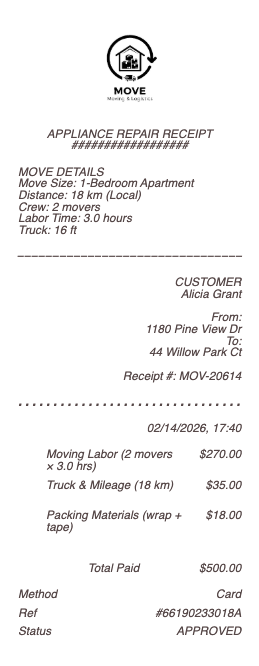
What’s on a Moving Company Receipt
Mover name and, for interstate moves, the USDOT number — the federal license every legitimate long-distance mover carries
Origin and destination, and the move date
The pricing basis — hourly for local, or weight and distance for long-distance
Estimate type — binding or non-binding — and the quoted amount
Services — labor/crew hours, packing, materials, stairs/long-carry, storage
Valuation/insurance selected — released value vs full value protection
Deposit paid, balance, total, and payment method
Binding vs. Non-Binding Estimates — What Determines the Final Bill
The estimate type is the single biggest factor in whether the receipt matches the quote. A binding estimate fixes the price for the listed items and services — the total should not change unless you add things, which the receipt would itemize. A non-binding estimate is only a projection: the final charge is based on the actual weight and hours, so the receipt can legitimately differ from the quote, and disputes arise when it differs a lot. For local hourly moves, the crew size and hours drive the cost. Reading which estimate type you agreed to — it is on the paperwork — is how you know whether a higher final bill is legitimate or worth challenging.
Valuation, the Bill of Lading, and Liability
Two documents govern what happens if something is damaged. Valuation is the mover’s liability coverage, and it is not insurance: the default released value protection pays only a token amount per pound (famously little), while full value protection costs more but covers repair or replacement — the receipt shows which you chose, and it decides what a damage claim is worth. The bill of lading is the contract and receipt for the shipment itself, listing the goods and the terms; keep it, because it is the primary document for any loss-or-damage claim. Anyone moving valuables should read the valuation line before the truck loads, not after a box is dropped.
Deposits, Expenses, and Getting a Copy
Moves often take a deposit to book the date, recorded on the receipt against the balance due on completion — and a demand for a large cash deposit upfront is a known red flag for rogue movers, so the documented, reasonable deposit is part of hiring a legitimate company. For relocation expenses — a job-related move, a corporate relocation package — the itemized receipt is the reimbursement and tax record, and employers reimbursing a move require it. Keep the estimate, the bill of lading, and the final receipt together as one file; a reputable mover retains the records and can reissue them, which matters because moving claims and reimbursements often surface weeks after the truck has gone.
Related home service receipts: see also our Lawn Care receipt guide and our IT Services receipt guide.
Create a Moving Company-Style Receipt
Our generator rebuilds a moving receipt — mover and (for interstate) DOT details, origin and destination, pricing basis and estimate type, itemized services, valuation selected, deposit and balance, and total — as a clean PDF for relocation, expense, or claim records when the original is lost.
Use it responsibly: document real moves at true amounts. Fabricating moving receipts for a relocation reimbursement, a tax deduction, or a damage claim that did not happen is fraud. For a genuine move, the mover keeps the bill of lading and receipt and can reissue them.
Frequently asked questions
Everything you need to know about the product and billing.
What should a moving company receipt include?
The mover and, for interstate moves, the USDOT number, the origin and destination, the pricing basis (hourly or weight/distance), the estimate type, itemized services, the valuation coverage selected, the deposit and balance, and the total.
What is the difference between a binding and non-binding moving estimate?
A binding estimate fixes the price for the listed items and services, so the receipt should match unless you add things. A non-binding estimate is a projection — the final charge is based on actual weight or hours and can legitimately differ.
What is valuation on a moving receipt, and is it insurance?
Valuation is the mover’s liability coverage, not insurance. Released value pays only a token amount per pound; full value protection costs more but covers repair or replacement. The receipt shows which you chose, and it sets what a damage claim is worth.
What is a bill of lading?
The contract and receipt for your shipment, listing the goods and terms. It is the primary document for any loss-or-damage claim, so keep it with the final receipt.
Is a large upfront cash deposit for a move normal?
A reasonable documented deposit to hold the date is normal; a demand for a large cash deposit upfront is a known red flag for rogue movers. The receipt should record the deposit against the balance due on completion.
Do I need the receipt for a relocation reimbursement?
Yes — for a job-related or corporate move, the itemized moving receipt is the reimbursement and tax record, and employers reimbursing a relocation require it. Keep the estimate, bill of lading, and final receipt together.