A prescription receipt is the slip that comes stapled to the pharmacy bag — the per-fill record of one medication: what was dispensed, the Rx number, the days supply, the refills left, and what you paid after insurance. Reading it correctly is how you track refills, reconcile copays, and reclaim costs, and it is a different document from the register receipt printed alongside it.
Prescription Receipt
Add custom logo
Edit line items
Choose payment method
Add/remove elements
Customize business information
Choose font
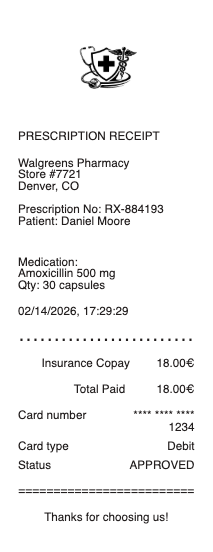
What’s on a Prescription Receipt
Patient name and the prescriber who wrote the order
The Rx number — the pharmacy’s identifier for this prescription, used for every refill and inquiry
Medication name, strength, and quantity dispensed
Fill date and days supply — the pair that tells you when the next fill is due
Refills remaining before the prescriber must renew
Price breakdown — what insurance paid and the copay or cash price you paid
Pharmacy name, address, and phone
How to Read a Prescription Receipt (CVS, Walgreens, Walmart, and Everyone Else)
The layouts differ, the fields do not. On a CVS prescription receipt, a Walgreens slip, or a Walmart pharmacy printout you are looking for the same anchors: the Rx number (the long number near the barcode), the fill date next to the days supply, and the refills-remaining line — often “0 refills, contact prescriber” when it is time to call the doctor. The dollar figure printed largest is what you paid; the insurance-paid amount, when shown, sits above it. If you use one pharmacy consistently, those slips together form your medication history, fill by fill.
The price line hides one more variable: the discount card. A fill run through a pharmacy discount program instead of insurance prints the discounted cash price — often lower than the copay would have been — but that payment typically does not count toward the insurance deductible, and some reimbursement programs treat it differently. The receipt showing which route priced the fill is what makes the difference auditable.
Per-Fill Receipts vs. the Annual Prescription History Printout
For taxes, dependent claims, or a reimbursement backlog, do not reconstruct a year from stapled bag slips — every major pharmacy prints a prescription history report on request: all fills for the year, with dates, medications, and amounts paid, in one document. Ask at the counter or download it from the pharmacy’s site or app. The per-fill receipt still matters in the moment — it is what a benefits administrator wants attached to a single claim — but the annual printout is the cleaner substantiation for anything spanning months.
Plan reviews are a third use for the same printout: a year of fills in one list is what Medicare and marketplace plan comparisons — and formulary appeals — ask you to bring, rather than a shoebox of stapled slips.
Households managing several patients should split histories by person, not by pharmacy trip: dependent-care claims, per-person deduction thresholds, and a specialist's request for a medication list all read one patient's record at a time. The annual printout can be requested per family member — and filed that way, it answers questions the shoebox of mixed slips cannot.
Prescription Glasses and Other Prescription-Adjacent Receipts
A prescription glasses receipt from an optical shop follows its own pattern: it should itemize the exam (if billed there), frames, and lenses with their options, because vision plans and FSA administrators reimburse those pieces differently — frames often capped, lenses and coatings usually covered as medical. Contact lenses work the same way. If the receipt lumps everything into one line, ask the optician for an itemized copy before filing; a receipt that names the prescription components clears review in one pass.
Related pharmacy receipts: see also our pharmacy receipt guide and our Walgreens receipt guide.
Create a Prescription-Style Receipt
Our generator rebuilds a prescription-style receipt — patient, prescriber, Rx number, medication line with quantity and days supply, and the payment breakdown — as a clean PDF for personal medication records or replacing a faded slip in your files.
Use it responsibly: recreate only real fills with real amounts. Submitting fabricated prescription receipts to insurers, benefits plans, or tax authorities is fraud, and pharmacies can reprint genuine records on request — that is always the right document for a claim.
The store-side slip and FSA rules live on the pharmacy receipt page; broader visit paperwork on the medical receipt page.
Frequently asked questions
Everything you need to know about the product and billing.
What is the Rx number on a prescription receipt?
The pharmacy’s identifier for your specific prescription at that location. Give it when requesting refills or asking questions — it pulls up the exact medication and fill history instantly.
How do I know when my refill is due from the receipt?
Add the days supply to the fill date. A receipt showing a 30-day supply filled on the 3rd means the next fill is due around the 2nd of the next month; most pharmacies allow filling a few days early.
What does “0 refills remaining” mean?
The prescriber authorized no further fills, so the pharmacy needs a renewed prescription before dispensing again. Contact your prescriber, or ask the pharmacy to send the renewal request for you.
Can I get a full-year record instead of collecting every slip?
Yes — ask any major pharmacy for a prescription history printout, or download it from their site or app. It lists every fill with dates and amounts paid, which is the cleaner document for taxes and claim backlogs. Request it per family member — dependent claims and deduction thresholds read one patient at a time, and per-person histories file themselves.
What should a prescription glasses receipt show?
The exam, frames, and lenses itemized separately with their options, because vision plans and FSAs reimburse each piece differently. Ask the optician for an itemized copy if yours shows one lump sum.
Is the prescription receipt the same as the register receipt?
No. The register receipt proves the store transaction; the prescription receipt attached to the bag carries the medication details — Rx number, days supply, refills — that claims and medication records actually need. Watch the pricing route too — a discount-card fill prints a cash price that usually bypasses the deductible, which matters for reimbursement paperwork.