A vet receipt is the itemized record of a visit to the veterinarian — exam, vaccines, diagnostics, procedures, and medications — and it does more work than a typical service slip for one reason: unlike human healthcare, the vet does not bill an insurer. You pay in full at the visit, and if you have pet insurance you claim the money back yourself using this receipt. This page explains what it shows and why the itemization matters.
Vet Receipt
Add custom logo
Edit line items
Choose payment method
Add/remove elements
Customize business information
Choose font
What’s on a Vet Receipt
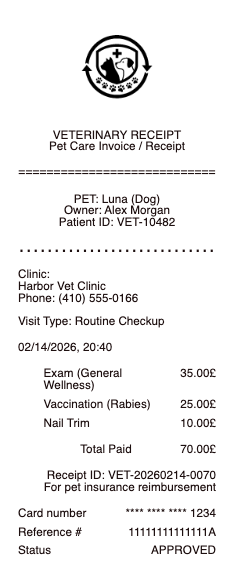
Clinic and veterinarian details, and the visit date
Patient info — pet name, species, breed, and often age or microchip
Itemized services — exam/consult fee, vaccines, diagnostics (bloodwork, x-ray), procedures
Medications and products dispensed, each priced separately
Line-item costs, any tax, and the total paid
Payment method and balance, if a plan or deposit applied
A diagnosis or reason for visit — often needed for an insurance claim
Why Itemization Matters — Pet Insurance Is Reimbursement
Here is the key difference from human medical care: pet insurance does not pay the vet directly. You settle the full bill at checkout, then submit the itemized invoice to your insurer — Trupanion, Nationwide, Healthy Paws, ASPCA, Lemonade, Embrace, Figo, and others — who reimburses the covered portion afterward. That makes the receipt your claim document, and insurers require it to be itemized: an unbroken total is often rejected, because they need to see which line is an exam, which is a vaccine (frequently excluded as routine), and which is the treatment they cover. Many also ask for the medical records alongside it. Keeping the detailed receipt — not just the card statement — is what gets a claim paid, so the line-by-line breakdown is the practical heart of the document.
Vaccines, Wellness Plans, and What’s Separate
Routine care produces its own paperwork. A rabies vaccination generates a separate certificate (with tag number) that boarding, grooming, and licensing require — the receipt proves you paid, the certificate proves immunity, and they are not the same document. Many clinics sell wellness plans — Banfield’s Optimum Wellness Plan is the best-known — which spread routine-care cost over monthly payments; that is a payment plan, not insurance, and its receipts look different from a per-visit bill. Vaccines, flea/tick and heartworm preventives, and spay/neuter each appear as their own lines because owners, breeders, and boarding facilities often need to show a specific one. When you need proof of a single service, the itemized receipt is what isolates it from the rest of the visit.
Taxes, Records, and Getting a Copy
Most pet care is a personal expense, but some vet costs are deductible — a documented service animal’s care as a medical expense, or animals kept for a farm or breeding business — and the itemized receipt is the substantiation the IRS expects. Breeders and working-animal owners keep these as business records. For everyone else, the receipt matters for insurance claims, for transferring history to a new vet, and for tracking a chronic condition’s cost over time. Clinics keep your account on file, so a lost receipt is usually a quick reprint or a portal download — many now email an itemized invoice automatically. For any of these uses, ask for the itemized version, since a summary total won’t satisfy an insurer or the IRS.
Related medical receipts: see also our Medical receipt guide and our Gym Membership receipt guide.
Create a Vet Receipt
Our generator rebuilds an itemized veterinary receipt — clinic and patient details, per-line services and medications, costs, and total — as a clean PDF when you need a legible copy for an insurance claim, your records, or a business expense file.
Use it responsibly: recreate only real visits with their true services and amounts. Fabricating a vet receipt to inflate a pet-insurance claim, invent a business deduction, or misrepresent an animal’s care is fraud — insurers cross-check against clinic records and often request the underlying medical file. Your veterinarian’s own invoice is the authoritative document; this tool is for legitimate record-keeping only.
Frequently asked questions
Everything you need to know about the product and billing.
What does a vet receipt show?
The clinic and veterinarian, the visit date, the pet’s details (name, species, breed), itemized services — exam fee, vaccines, diagnostics, procedures — plus medications dispensed, per-line costs, the total paid, and often the diagnosis or reason for the visit.
Why does pet insurance need an itemized vet receipt?
Because pet insurance reimburses you after you pay the vet in full — it does not bill the clinic. Insurers need to see each line (exam, vaccine, treatment) to pay the covered portion, so an unbroken total is often rejected. The itemized receipt is your claim document.
Is a vet receipt the same as a rabies certificate?
No. The receipt proves you paid; the rabies certificate (with a tag number) proves immunity and is what boarding, grooming, and licensing require. They are separate documents, and you often need to keep both.
Are veterinary bills tax-deductible?
Usually not for a pet, but a documented service animal’s care can count as a medical expense, and animals kept for a farm or breeding business are a business expense. In those cases the itemized receipt is the substantiation the IRS expects.
How do I get a copy of a vet receipt?
Your clinic keeps your account on file, so it is usually a quick reprint or a download from the patient portal — many vets now email an itemized invoice automatically. Ask for the itemized version, since a summary total won’t satisfy an insurer.
Is a wellness plan the same as pet insurance?
No. A wellness plan (like Banfield’s Optimum Wellness Plan) spreads the cost of routine care over monthly payments — it is a payment plan, not insurance. Its receipts look different from a per-visit bill and don’t reimburse unexpected treatment.