A windshield repair receipt covers auto glass work — a chip repair or a full windshield replacement — and it carries two modern wrinkles that make it more than a simple service slip: glass claims are often insured with no deductible, and a replacement now usually requires recalibrating the car’s safety cameras. This page covers what the receipt shows and why insurance and ADAS shape it.
Windshield Repair Receipt
Add custom logo
Edit line items
Choose payment method
Add/remove elements
Customize business information
Choose font
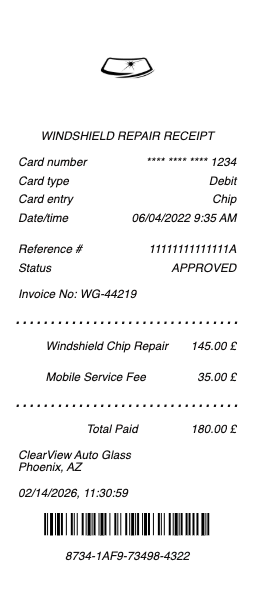
What’s on a Windshield Repair Receipt
Auto glass shop — a fixed location or a mobile technician who came to you
The vehicle and the service date
Repair vs. replacement — a chip/crack repair, or a full windshield replacement
Glass type — OEM or aftermarket, on a replacement
ADAS recalibration, when the vehicle has camera-based safety systems
Insurance details — claim number, deductible (often waived for glass), and direct billing
Total and payment method or insurer-paid amount
Insurance and the Zero-Deductible Glass Claim
Windshield work is unusual in insurance: many comprehensive policies cover glass with a reduced or zero deductible, and some states mandate no-deductible windshield replacement, so a repair or replacement can cost you nothing out of pocket while still generating a receipt. That is why the receipt often shows a claim number and the insurer paying the shop directly rather than a personal charge. A chip repair is cheap or free under glass coverage and is what insurers prefer, since catching a chip early avoids a full replacement — many will waive any cost for a repair to head off a bigger claim later. The receipt documents whether it was a repair or replacement and who paid, which is exactly what you verify against your policy.
ADAS Recalibration: The New Line on Glass Receipts
The biggest change to windshield receipts in recent years is ADAS recalibration. Modern cars mount forward-facing cameras and sensors — for lane-keeping, automatic braking, adaptive cruise — behind the windshield, and replacing the glass disturbs their aim, so they must be recalibrated or those safety systems can misbehave. A proper windshield replacement receipt on an equipped vehicle should show a recalibration line (static, dynamic, or both), which is a real, non-optional cost — skipping it is a genuine safety issue, not an upsell. If your car has driver-assist features and the replacement receipt has no recalibration, that is worth questioning. This single line is why a modern windshield replacement costs far more than it used to.
OEM vs. Aftermarket Glass, Records, and Resale
On a replacement, the receipt should state the glass type: OEM glass matches the original from the vehicle maker, while aftermarket glass is a third-party equivalent, often what insurers default to for cost. For most cars either is fine, but on vehicles with sensors, sensor-compatible glass and correct recalibration matter more than the brand. Keep the receipt because it documents the glass and the recalibration for resale and for any later issue — a leak, a sensor fault, a failed recalibration are all resolved against it, and reputable shops warranty both the glass installation and the calibration. For a business or fleet vehicle, the glass receipt is the expense and insurance record. File it with the vehicle documents.
Related auto service receipts: see also our collision repair receipt guide and our AutoZone receipt guide.
Create a Windshield Repair-Style Receipt
Our generator rebuilds an auto-glass receipt — shop and vehicle, repair or replacement, glass type, any ADAS recalibration, insurance/claim details, and total — as a clean PDF for insurance, warranty, or records when the original is lost.
Use it responsibly: auto glass receipts feed insurance claims, so fabricating or inflating one — faking a replacement, a recalibration, or a claim — is insurance fraud with serious consequences. Recreate only genuine work at true amounts; the glass shop and insurer hold the authoritative records any claim is checked against.
Frequently asked questions
Everything you need to know about the product and billing.
What should a windshield repair receipt include?
The auto glass shop and vehicle, whether it was a chip repair or a full replacement, the glass type (OEM or aftermarket), any ADAS recalibration, insurance claim and deductible details, and the total or insurer-paid amount.
Is windshield repair covered by insurance with no deductible?
Often — many comprehensive policies cover glass with a reduced or zero deductible, and some states mandate no-deductible windshield replacement. The receipt frequently shows a claim number and the insurer paying the shop directly.
What is ADAS recalibration on a windshield receipt?
Modern cars mount safety cameras and sensors behind the windshield; replacing the glass disturbs their aim, so they must be recalibrated. A proper replacement receipt on an equipped car shows a recalibration line — a real, non-optional safety cost, not an upsell.
Why is windshield replacement so much more expensive now?
Mainly ADAS recalibration — recalibrating the driver-assist cameras and sensors behind the glass adds a significant, necessary line on modern vehicles that older windshield jobs did not have.
What is the difference between OEM and aftermarket windshield glass?
OEM glass matches the original from the vehicle maker; aftermarket is a third-party equivalent, often the insurer’s default for cost. On sensor-equipped cars, sensor-compatible glass and correct recalibration matter more than the brand.
Should I repair a chip or replace the windshield?
Repairing a chip early is cheap or free under glass coverage and is what insurers prefer, since it avoids a full replacement later. The receipt documents whether a repair or replacement was done and who paid.