"Return receipt" means two different things: the refund receipt a store gives you when it processes a return, and the certified mail return receipt the USPS uses to prove a letter was delivered. This page focuses on the store version — what's on a return or refund receipt, how returning an item without the original receipt generally works across major retailers, and how stores look purchases up — with a note on the postal meaning at the end.
Return Receipt
Add custom logo
Edit line items
Choose payment method
Add/remove elements
Customize business information
Choose font
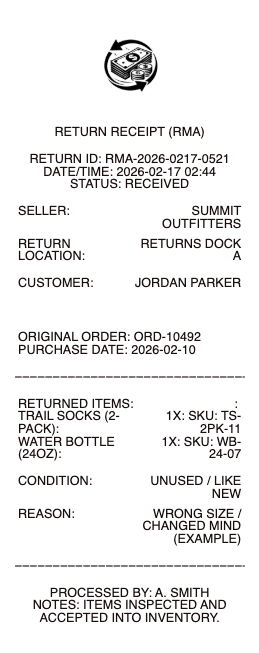
What's on a return (refund) receipt
When a store processes a return, it prints a return or refund receipt — separate proof that the return happened. It typically shows:
Return authorization / RMA number — a reference for the return, especially for online orders.
Original purchase reference — a link back to the original sale, date, and store.
Item(s) returned — a description and quantity of what came back.
Refund amount & method — how much was refunded and whether it went to the original card, cash, or store credit.
Restocking fee — any fee deducted, common on electronics or opened items.
Date & associate — when the return was processed and by whom.
Returning an item without the original receipt
Most major retailers accept some returns without the original receipt, but on stricter terms. The common pattern: the store tries to look up the purchase using the card you paid with or your account; if it can, the return proceeds almost normally. If it can't, you'll usually need a photo ID (which the store logs to limit no-receipt returns), and the refund comes as store credit or a merchandise card rather than cash. Retailers like Walmart, Target, Costco, Home Depot, and Ross each set their own limits and windows — always check the specific store's policy before you go.
Store-by-store details: see our guides to Walmart's return policy without a receipt and Home Depot's return policy without a receipt.
How stores look up a purchase for a return
The easiest returns are the ones the store can verify electronically. Paying with a credit or debit card, using a store loyalty account or app, or keeping the digital receipt all let an associate pull up the original sale in seconds. That's why registering a card or scanning a loyalty number at checkout is worth the few seconds — it means a lost paper receipt rarely blocks a return. Gift receipts help too: they prove purchase without showing the price, and route the refund to store credit for the recipient.
The other "return receipt": certified mail
You may be searching for a certified mail return receipt instead — a completely different thing. That's the USPS service (the green card, or its electronic version) that gives the sender proof that a mailed item was delivered, including the recipient's signature and the delivery date. It's used for legal notices, contracts, and tax documents where you need evidence of delivery. If that's what you need, it's a postal add-on service bought at the time of mailing — not a store refund document.
Related transaction receipts: see also our Refund receipt guide and our Duplicate receipt guide.
Keep clean records of returns and refunds
Whether you're tracking a refund for your budget or a business needs to document returned merchandise, our receipt templates and generator can reproduce a clear return or refund record — original reference, items, refund amount, and method — so a faded return slip doesn't leave a gap in your records.
For genuine record-keeping only. Recreate return receipts only for refunds that actually occurred; fabricating a return or refund record is fraud. Use these tools to organize your own real transactions.
What stores accept as evidence is covered in depth on the proof of purchase receipt page.
Frequently asked questions
Everything you need to know about the product and billing.
What is a return receipt?
In a store context it's the refund receipt you get when a return is processed — showing the items returned, the refund amount and method, and a reference to the original purchase. ("Return receipt" can also mean the USPS certified-mail service that proves a letter was delivered.)
Can I return something without a receipt?
Often yes, on stricter terms. Stores usually try to look up the purchase by the card you used or your account; if they can't, you'll typically need a photo ID and receive store credit rather than a cash refund. Limits and time windows vary by retailer.
How do stores look up a purchase without a receipt?
By searching the card you paid with, your loyalty account or app, or a digital receipt. Paying on a consistent card or scanning a loyalty number at checkout lets an associate find the original sale even if you've lost the paper receipt.
What is a restocking fee on a return receipt?
A fee some stores deduct from your refund, common on electronics or opened items. If it applies, it appears on the return receipt as a reduction of the amount refunded.
What is a certified mail return receipt?
A USPS service — the green card or its electronic version — that gives the sender proof a mailed item was delivered, including the recipient's signature and delivery date. It's used for legal, tax, and contract mail, and is unrelated to store refunds.
Does a refund go back to my original payment method?
With the original receipt or an electronic lookup, refunds usually return to the original card or payment method. Without proof of purchase, stores typically issue store credit or a merchandise return card instead.