A security deposit receipt is the landlord's written acknowledgment that a tenant's deposit was received — the document both sides rely on when it's time to return the money. Several states also require landlords to disclose where the deposit is held. This guide covers what a security deposit receipt must include, the state rules around deposits, and how a combined rent-and-deposit receipt works at move-in.
Security Deposit Receipt
Add custom logo
Edit line items
Choose payment method
Add/remove elements
Customize business information
Choose font
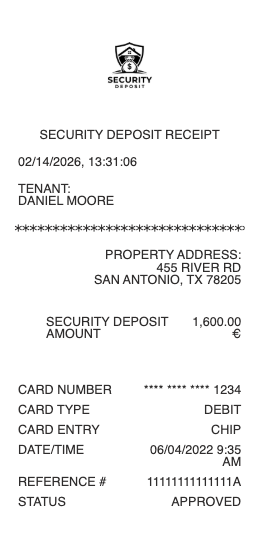
What's on a security deposit receipt
A proper deposit receipt removes every ambiguity a move-out dispute could feed on:
Landlord and tenant names — who received and who paid the deposit.
Property & unit — the rental the deposit secures.
Deposit amount & date received — the exact sum and when it was paid.
Purpose — that it's a refundable security deposit (not rent, not a fee), with reference to the lease terms.
Where it's held — the bank or escrow account, which several states require disclosing.
Payment method & signatures — how it was paid and both parties' acknowledgment.
State rules: receipts, escrow, and disclosure
Security deposits are among the most regulated payments in renting. Depending on the state, a landlord may be required to provide a written receipt for the deposit, disclose the bank or escrow account where it's held, keep it separate from personal funds, and in some states pay or credit interest on it. Deposit caps (often one to two months' rent) and strict return deadlines with itemized deduction statements round out the picture. The receipt is where good compliance starts: it fixes the amount and date on paper, which every later rule refers back to.
Where deposits sit in escrow, a follow-on question arrives yearly: interest on the deposit. Some jurisdictions require landlords to hold deposits in interest-bearing accounts and credit or pay the interest to the tenant on a schedule — and where that applies, the annual interest statement joins the deposit receipt in the tenancy file. A deposit refund years later should reconcile against both.
Move-in vs. move-out: two different documents
Keep the two ends of the tenancy straight. At move-in, the security deposit receipt documents the deposit's collection — amount, date, and terms. At move-out, the landlord provides a refund statement: the deposit returned, minus itemized deductions for damage beyond normal wear, within the state's deadline. The move-in receipt is what makes the move-out math checkable — without it, "how much did we even pay?" becomes the first dispute. Tenants should keep the deposit receipt with the lease for the entire tenancy.
The bridge between the two ends is the condition documentation: the move-in inspection report or checklist, signed by both sides, is what the move-out deductions get argued against. A deposit receipt without a condition report protects the money's paper trail but not the money — the deductions fight is a condition fight.
Rent and security deposit combined receipts
Move-in day usually involves one payment covering first month's rent plus the deposit (sometimes last month's rent too). A combined rent and security deposit receipt itemizes each component separately — rent as rent, deposit as refundable deposit — because they're treated differently: rent is the landlord's income immediately, while the deposit is held in trust. Lumping them into one unlabeled total causes both accounting and legal headaches later, so the receipt should break the payment out line by line, with the deposit line noting where it will be held.
Related rent and housing receipts: see also our Rent receipt guide and our Mortgage Payment receipt guide.
Create a security deposit receipt
Our security deposit receipt template and generator lays out every field — landlord and tenant, property, deposit amount and date, where it's held, and signature lines — plus a combined rent-and-deposit format, in clean printable PDF form.
For genuine deposits only. A deposit receipt should reflect money actually received and held; fabricating or altering one to misstate what was paid or owed is fraud. Use these templates to document real move-in payments between landlords and tenants.
Related receipts: pair this with a rent receipt for monthly payments, a refund receipt for deposit returns, or a landlord rent receipt.
Frequently asked questions
Everything you need to know about the product and billing.
What should a security deposit receipt include?
The landlord and tenant names, the property and unit, the deposit amount and date received, a note that it's a refundable security deposit under the lease, where it's held (required in several states), the payment method, and signatures.
Do landlords have to give a receipt for a security deposit?
In several states, yes — and some also require disclosing the bank or escrow account where the deposit is held, keeping it separate from personal funds, or paying interest. Even where optional, a written receipt protects both sides at move-out.
Is a security deposit receipt different from a deposit refund statement?
Yes. The receipt documents the deposit's collection at move-in; the refund statement at move-out shows the deposit returned minus itemized deductions. The move-in receipt is what makes the move-out math verifiable. The refund statement should also account for any interest the deposit earned, where local rules require interest-bearing escrow.
How does a rent and security deposit receipt work?
Move-in payments usually combine first month's rent and the deposit, so the receipt itemizes them separately — rent as income, deposit as refundable and held in trust. Each line is labeled so the amounts aren't disputed later.
Where should a security deposit be held?
Depending on the state: in a separate or escrow bank account, sometimes interest-bearing, and disclosed to the tenant. The receipt is the natural place to record the holding account details required by those rules.
How long should a tenant keep the deposit receipt?
For the entire tenancy, filed with the lease. At move-out it's the proof of exactly what was paid, which anchors the refund calculation and any dispute over deductions. Alongside any condition reports and — where escrow rules apply — the annual interest statements; the final refund should reconcile against all of them.