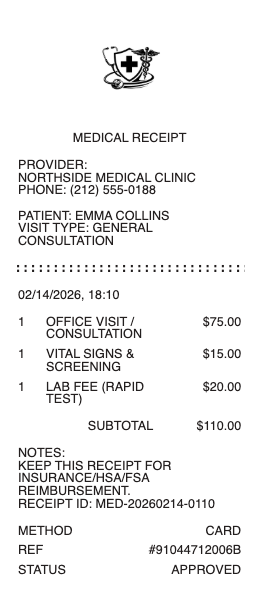
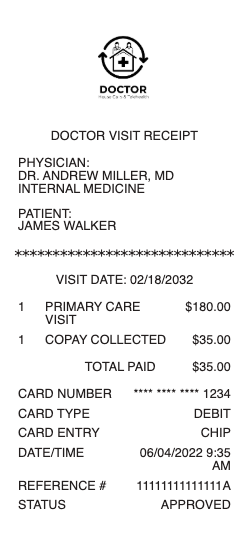
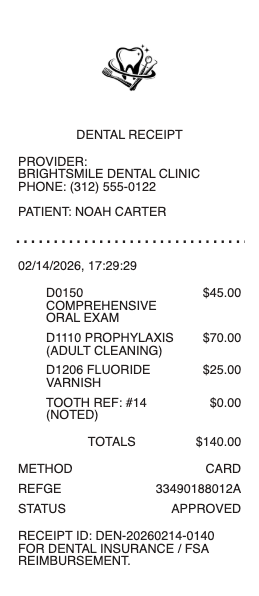
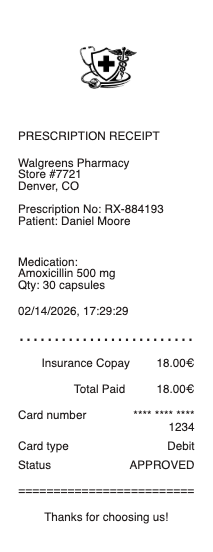
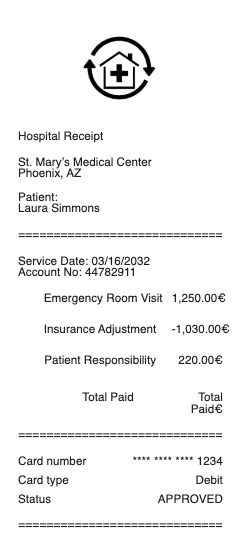
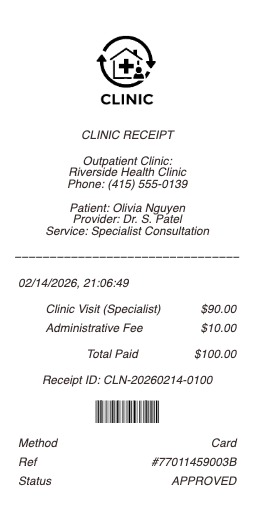
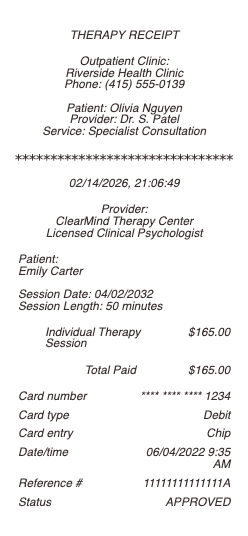
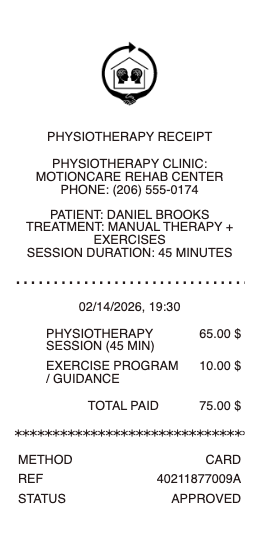
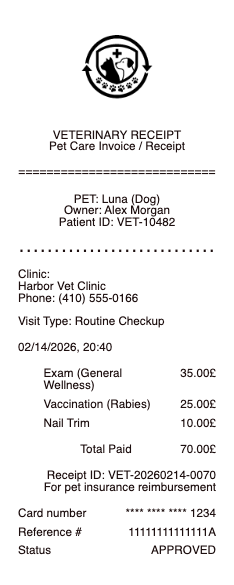
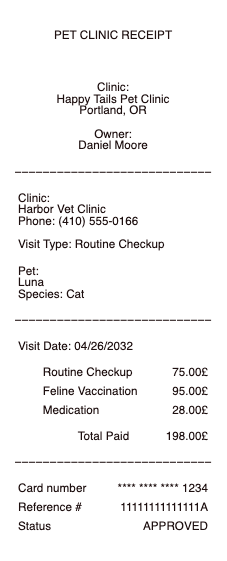
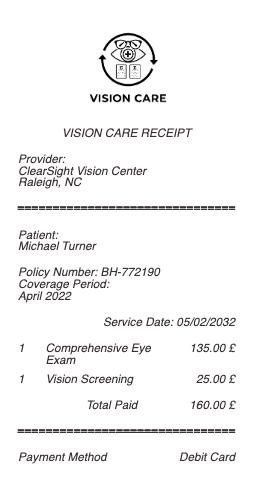
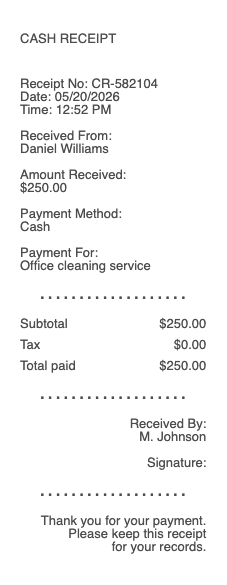
A medical or healthcare receipt is the document that turns a paid medical expense into a tax-deductible, FSA-reimbursable, or HSA-eligible record. Doctors, dentists, optometrists, therapists, urgent care centers, hospitals, and pharmacies all issue receipts to patients — but they get lost, the printout fades, and the patient portal goes down right when the FSA submission deadline approaches. Any Receipt Generator gives independent practitioners and patients a free template to issue a clean medical receipt or invoice or reconstruct a record of care that was actually provided and paid for.
A note on legitimate use. This template is for healthcare providers, independent practitioners, and small clinics issuing receipts to their own patients, and for patients reconstructing a record of medical care, prescriptions, or treatments they actually received and paid for. Producing a receipt for medical care that did not occur, inflating the amount, or fabricating documentation to support an HSA, FSA, HRA, or insurance reimbursement, an itemized medical-expense deduction (Schedule A, IRS Pub 502), a flexible-spending claim, a prior-authorization filing, or any third-party qualification is fraud and is not what this tool is for.
Who needs a medical or healthcare receipt
• Independent doctors, dentists, optometrists, chiropractors, and physical therapists in private practice issuing receipts to cash-pay patients
• Mental-health therapists, counselors, and licensed clinical social workers documenting paid sessions for patients seeking insurance reimbursement
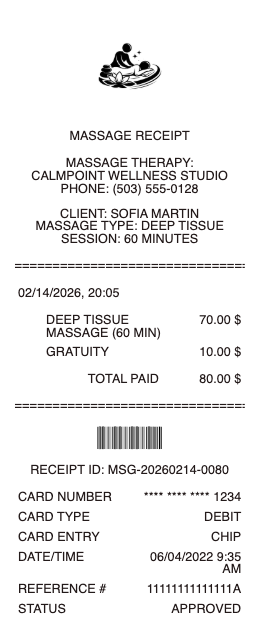
• Massage therapists, acupuncturists, and licensed alternative-medicine practitioners
• Independent pharmacies and compounding pharmacies issuing receipts for cash-pay prescriptions
• Patients submitting medical expenses to a Health Savings Account (HSA), Flexible Spending Account (FSA), or Health Reimbursement Arrangement (HRA)
• Patients reconstructing records of paid medical care for itemized deduction on Schedule A — eligible if total exceeds 7.5% of adjusted gross income
• Patients managing chronic conditions across multiple providers and pharmacies who need a consolidated record
• Caregivers documenting medical expenses paid on behalf of a dependent, parent, or qualifying relative
• Estate executors documenting end-of-life medical expenses on the final tax return of a deceased family member
What to include in a medical receipt
For HSA, FSA, HRA reimbursement, or a Schedule A deduction, the receipt must show specific information per IRS Publication 502 and FSA administrator rules:
• Provider’s name, full address, phone, and (where applicable) NPI number or state license number
• Patient’s name
• Date of service
• Description of the service or product (CPT code or plain-language description)
• Diagnosis or reason for service (ICD-10 code or plain language) — required by some FSA administrators for over-the-counter purchases
• Amount charged
• Insurance adjustment, if applicable
• Patient responsibility (the amount actually paid out of pocket)
• Payment method (cash, check #, card last 4, HSA debit card, FSA debit card)
• Date paid
• Provider’s signature or stamp
Over-the-counter receipts (pharmacy purchases) generally need the product name and pharmacy name plus the date — but some FSAs require a Letter of Medical Necessity for items like wellness products and supplements.
How to fill out a medical receipt
1. Open the medical receipt generator or the dental receipt generator depending on your practice
2. Enter your provider name, NPI or license number, address, and phone — these save for next time
3. Add the patient name and date of service
4. List each service or product with its description (CPT or plain-language)
5. Add the charge, any insurance adjustment, and the patient responsibility
6. Confirm the payment method and date paid
7. Click Download to export as PNG or JPG
8. Send a copy to the patient; keep a copy for the practice records
HSA, FSA, and HRA reimbursement
Three employer-sponsored health benefits use medical receipts for substantiation:
• Health Savings Account (HSA) — paired with a high-deductible health plan. Contribution limit (2026): $4,300 single / $8,650 family. Receipts are not submitted at the time of withdrawal, but you must keep them in case of IRS audit. Funds roll over year to year.
• Flexible Spending Account (FSA) — employer-sponsored, "use it or lose it" by year-end (or with a small carryover or grace period). Contribution limit (2026): $3,300 single. Receipts must be submitted to the FSA administrator (HealthEquity, WageWorks, Optum) for each claim.
• Health Reimbursement Arrangement (HRA) — employer-funded only. Receipts go to the HRA administrator. Each plan defines what’s eligible.
FSA administrators routinely audit submissions. Save every medical receipt for at least 7 years, especially for HSA — the IRS audit window is longer for tax-advantaged accounts.
Medical expense itemized deduction (Schedule A)
If you itemize on Schedule A, you can deduct unreimbursed medical and dental expenses that exceed 7.5% of your adjusted gross income. Eligible expenses per IRS Publication 502 include:
• Doctor, dentist, optometrist, chiropractor, and other licensed-practitioner fees
• Hospital and clinic charges
• Prescription medications (over-the-counter generally not, except insulin)
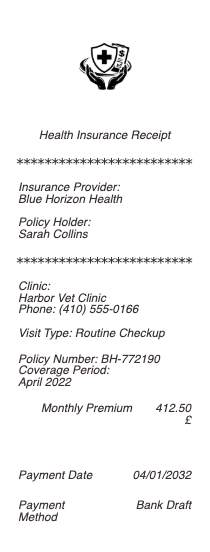
• Health insurance premiums (self-employed; W-2 employees pay with pre-tax payroll deductions, not deductible again)
• Long-term care insurance premiums (subject to age-based caps)
• Mileage to medical appointments (21¢ per mile for 2026, subject to revision)
• Lodging up to $50 per night while traveling for medical care
• Special equipment (wheelchairs, hearing aids, glasses, contact lenses)
• Mental health services and substance abuse treatment
Cosmetic procedures, gym memberships (without a Letter of Medical Necessity), and most over-the-counter items are not eligible.
Medical receipt vs Explanation of Benefits (EOB) vs claim
• Receipt — issued by the provider, shows what the patient actually paid out of pocket
• Explanation of Benefits (EOB) — issued by the insurance carrier, shows the negotiated rate, the insurer’s portion, and the patient responsibility. Not a receipt — it’s a payment summary.
• Claim form — the document submitted to insurance, FSA, or HRA. Often references both the receipt and the EOB.
For HSA / FSA / HRA submissions, you typically need the receipt showing the patient responsibility actually paid, plus sometimes the EOB if insurance was billed.
Recovering a lost medical receipt
• Most providers retain billing records 7+ years; ask the office for a duplicate by patient name, date of service, and date of birth
• Patient portals (MyChart, Athenahealth, Practice Fusion) typically archive receipts and can be re-downloaded
• Pharmacy chains (CVS, Walgreens, Rite Aid, Costco) keep prescription history; ask the pharmacist for a year-end printout
• Insurance EOBs are kept by the carrier for many years; combined with a card statement, they can substantiate the expense
• For HSA / FSA reconstruction, an itemized statement from the provider plus the bank or card statement is generally accepted by administrators
Download formats
Every medical receipt exports as PNG or JPG. Both work for upload to FSA administrator portals, attachment to insurance claim forms, email to your accountant, and personal medical records.
Generate your medical receipt now →
See also: Medical Receipt · Dental Receipt · Hospital Receipt · Clinic Receipt · Therapy Receipt · Prescription Receipt · CVS Pharmacy Receipt · Walgreens Pharmacy Receipt
Medical invoice vs medical receipt
A medical invoice is the bill the provider sends — it lists services rendered, billed amounts, insurance adjustments, and the patient’s remaining responsibility. A medical receipt is the proof of payment after the invoice is settled, showing the date paid, amount paid, and method. Insurance claims, HSA/FSA reimbursement, and IRS Schedule A deductions all generally require both documents — the invoice to show the medical service was rendered, and the receipt to show out-of-pocket payment.
Use this template as either: an invoice (issued by a provider before payment) or a receipt (issued after payment). The fields are the same — provider name, NPI, date of service, CPT/ICD codes, charges, payments, and balance.
Legal disclaimer
Any Receipt Generator does not validate, certify, or verify the authenticity of any generated document, and does not provide medical, legal, or tax advice. This tool is provided strictly for legitimate purposes — independent healthcare providers and small clinics issuing receipts to their own patients, and patients reconstructing a record of medical care, prescriptions, or treatments they actually received and paid for.
The following uses are strictly prohibited: producing a receipt for medical care, prescriptions, or treatments that did not occur; inflating the amount of care provided or paid; fabricating documentation to claim an HSA, FSA, HRA, or insurance reimbursement, an itemized medical-expense deduction under Schedule A or IRS Publication 502, a flexible-spending claim, an FMLA filing, an ADA accommodation request, a prior-authorization request, an immigration medical exam record, or any third-party qualification; or any use intended to deceive, defraud, or mislead any insurer, FSA or HSA administrator, employer, regulator, court, or other third party.
Use of this tool for the creation of fraudulent documentation or to engage in any unlawful activity is strictly prohibited and may constitute wire fraud, mail fraud, healthcare fraud (18 USC
1347), insurance fraud, tax fraud, or other criminal offenses depending on jurisdiction. Users assume full legal responsibility for the accuracy and intended use of any files they generate. This tool does not store protected health information (PHI) and should not be used to create or transmit documents containing PHI in violation of HIPAA.
Federal & state law. Use of this tool to fabricate documentation or otherwise commit fraud may constitute violations of US federal law, including wire fraud (18 U.S.C.
1343), mail fraud (18 U.S.C.
1341), bank fraud (18 U.S.C.
1344), false statements to federal agencies (18 U.S.C.
1001), tax fraud (26 U.S.C.
7206), healthcare fraud (18 U.S.C.
1347), and parallel state and foreign criminal statutes. Penalties include fines up to $250,000 per offense, imprisonment, restitution, and civil liability.
No professional advice. Information provided through this tool is for general informational purposes only and does not constitute legal, tax, accounting, financial, medical, insurance, or other professional advice. Consult a qualified professional (physician, licensed clinician, tax preparer, attorney, or accountant) before relying on any generated document for tax filing, insurance or HSA/FSA claim submission, court proceedings, or any third-party transaction.
"AS IS" service; no warranty. Any Receipt Generator is provided "AS IS" and "AS AVAILABLE" without warranties of any kind, express or implied, including merchantability, fitness for a particular purpose, accuracy, completeness, or non-infringement. We make no representation that any generated document will satisfy the legal, regulatory, or evidentiary requirements of any specific jurisdiction, recipient, or use case.
Indemnification. By using this tool, the user agrees to defend, indemnify, and hold harmless Any Receipt Generator and its operators, employees, contractors, and affiliates from and against any and all claims, damages, fines, penalties, losses, costs, and expenses (including reasonable attorneys' fees) arising from or related to the user's use or misuse of the tool, including violation of these terms, HIPAA, or applicable law.
Acceptance & Terms. By accessing or using this tool, the user acknowledges having read and agreed to these terms and to our Terms of Service and Privacy Policy. Continued use after any update to these terms constitutes acceptance of the revised terms.
Any Receipt Generator is not affiliated with, endorsed by, or authorized by the IRS, the Department of Health and Human Services, the Centers for Medicare & Medicaid Services, any HSA, FSA, or HRA administrator, any insurance carrier, any pharmacy chain, or any healthcare regulator. All trademarks, service marks, trade names, and brand references mentioned remain the property of their respective owners and are used only for descriptive reference purposes.
Related category: Pharmacy and Health Samples